
Introduction
More Americans are skipping the waiting room. Rather than scheduling a clinic appointment to check basic biomarkers, millions are ordering test kits online, collecting samples at home, and reviewing results on their phones within days. According to Grand View Research, the direct-to-consumer testing market is valued at $5.4 billion in 2026 and projected to reach $16.1 billion by 2033 — home-based health monitoring is no longer a niche trend.
The challenge is that "at-home health test kit" covers a lot of ground. Blood biomarker panels, hormone checks, DNA sequencing, STI screening — each category serves a different purpose, uses different lab standards, and varies widely in accuracy and cost. The wrong kit doesn't just waste money — it can give you a false sense of security about a health marker that actually needs attention.
This guide breaks down the best at-home health test kits in 2026 by use case, lab accreditation, accuracy, and cost — so you can choose based on what you actually need to know about your health, not just what's popular.
Key Takeaways
- Only buy kits processed by CLIA-certified or CAP-accredited labs — these meet federal quality standards for accuracy and reliability.
- Top picks: Everlywell (best overall), LetsGetChecked (best for hormones and STIs), Nebula Genomics (best for whole-genome DNA), and myLAB Box (best for sexual health).
- Match the test to a specific health goal: broad wellness screening, cardiovascular risk, hormone levels, or genetic planning.
- At-home tests are screening tools, not diagnoses — always follow up abnormal results with a physician.
- Account for total cost: compare membership fees, retest frequency, and whether result interpretation is included.
What Are At-Home Health Test Kits?
At-home health test kits let you collect a biological sample — blood, saliva, urine, or a swab — without visiting a clinic or getting a referral. Results come back either instantly or through a certified lab, depending on the kit type.
There are two distinct formats:
- Self-tests: Produce instant results at home (pregnancy tests, COVID rapid tests). No lab involved.
- Self-collection tests: You collect the sample and mail it to a certified lab. Results arrive digitally within days to weeks.
This guide focuses on self-collection lab-based kits. They test a broader range of biomarkers than instant tests and are processed under the same federal quality standards used in clinical settings — which makes them practical tools for tracking specific markers like NAD+, hormones, or metabolic panels over time.
Uptake has grown substantially. A 2024 survey of 2,163 US adults ages 50–80 found that 48.1% had purchased an at-home medical test, with 75.1% citing convenience as the primary reason. Broader test menus and faster turnaround times have made these kits a genuine alternative to clinic-based screening for many health conditions.
Best At-Home Health Test Kits in 2026
Selections below were evaluated on lab certification standards, biomarker range, sample collection ease, turnaround time, result actionability, and overall cost-to-value ratio.
Everlywell — Best Overall
Everlywell is one of the most recognized at-home testing platforms in the US, with a catalog spanning seven categories: Daily Health, Digestive Health, Sexual Health, Hormone Health, Heart Health, Vitamins + Supplements, and Cancer Screening. All samples are processed through CLIA-certified lab partners, and results are delivered digitally with clinician review.
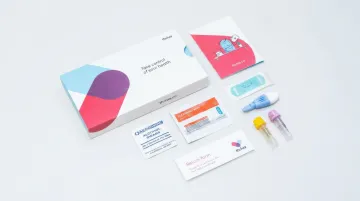
Its Heart Health Test stands out specifically — checking total cholesterol, LDL, HDL, triglycerides, HbA1c, and hsCRP (a key inflammation marker tied to cardiovascular risk). That combination of lipid fractions and an inflammatory marker in a single panel is genuinely useful for anyone monitoring heart health between physician visits.
| Feature | Details |
|---|---|
| Key Tests | Heart Health, Thyroid, Food Sensitivity, Hormone panels, HbA1c, Cancer Screening |
| Lab Certification | CLIA-certified lab partners |
| Turnaround Time | 5–7 business days after lab receipt (Food Sensitivity: 10–14 days) |
| Starting Price | Heart Health ~$99; Food Sensitivity ~$199; Thyroid ~$149 |
Best for: General health screening, cardiovascular risk monitoring, food sensitivity.
LetsGetChecked — Best for Hormones and STIs
LetsGetChecked has built a strong reputation in hormone testing and STI panels. Its labs are both CLIA-certified and CAP-accredited — the dual certification that signals the highest tier of lab quality available in the DTC space. Most results return in approximately 2–5 business days.
The hormone panels are notably thorough, covering:
- Testosterone and cortisol
- Thyroid function markers
- Female hormones: estrogen, progesterone, FSH, and LH
These are the markers most relevant for people experiencing unexplained fatigue, weight changes, mood shifts, or fertility concerns. Board-certified physicians are available for follow-up on abnormal results — which matters when hormone numbers come back outside normal range.
Note: STI-positive consultations are currently available at an additional fee ($39 for the consultation, with prescriptions extra for applicable infections).
| Feature | Details |
|---|---|
| Key Tests | Testosterone, Female Hormones, Cortisol, Thyroid, STI Panels |
| Lab Certification | CLIA-certified; CAP-accredited |
| Turnaround Time | ~2–5 business days |
| Starting Price | Hormone panels ~$99–$139; STI panels ~$99–$249 |
Best for: Hormone monitoring, STI screening, users who want physician follow-up on abnormal results.
Nebula Genomics — Best for DNA Health
Nebula Genomics offers whole-genome sequencing (WGS) — meaning it sequences 100% of your DNA, not just selected gene variants like most consumer DNA tests. Three tiers are available: Essential (1× depth), Pro (30× depth), and Elite (100× depth), at $245, $595, and $1,295 respectively, plus an annual membership fee after the first year.
The depth distinction matters. Higher sequencing coverage catches rare and low-frequency variants that partial-genome tests miss entirely. Each tier includes a growing library of research-backed genetic reports: 175+ for Essential, 250+ for Pro, and 350+ for Elite — updated as new research is published.
Privacy protections include SOC 2 compliance and GDPR alignment, though these remain vendor claims rather than independent audits.
| Feature | Details |
|---|---|
| Key Tests | Whole-genome sequencing, disease predispositions, carrier status, traits, ancestry |
| Lab Certification | CLIA-certified partner labs |
| Turnaround Time | Variable (not currently stated on product pages) |
| Starting Price | Essential $245 / Pro $595 / Elite $1,295 + annual membership |
Best for: Long-term genetic health planning, disease predisposition screening, users who want the deepest available genomic data.
myLAB Box — Best for Sexual Health
myLAB Box specializes in STI screening, offering one of the broadest at-home sexual health panels available. Its flagship Uber 8 Panel covers HIV I/II, hepatitis C, HSV-2, syphilis, chlamydia, gonorrhea, and trichomoniasis — all from a self-collected sample mailed to a CLIA-regulated lab. Results typically arrive 2–5 business days after the lab receives the sample (roughly 5–11 days total from order).
Positive results trigger a complimentary physician-affiliate consultation. For chlamydia, gonorrhea, and trichomoniasis, prescriptions may be sent directly — a concrete option for people who prefer managing treatment privately. Discreet packaging and a simple self-collection process make it practical for anyone who finds in-person STI testing uncomfortable.
| Feature | Details |
|---|---|
| Key Tests | HIV I/II, Hepatitis C, HSV-2, Syphilis, Chlamydia, Gonorrhea, Trichomoniasis, combo panels |
| Lab Certification | CLIA-regulated affiliated labs |
| Turnaround Time | 2–5 days after lab receipt; ~5–11 days from order |
| Starting Price | Individual tests ~$73–$79; Uber 8 Panel ~$209; Total Box ~$379–$409 |
Best for: Sexual health screening, discreet STI testing, users who want follow-up treatment support on positive results.
Types of At-Home Health Tests Available in 2026
Understanding which test category fits your situation saves time and money.
Blood biomarker panels are the most clinically actionable option for ongoing monitoring. They measure:
- Cholesterol fractions (LDL, HDL, triglycerides)
- Metabolic markers (glucose, HbA1c for diabetes risk)
- Inflammatory markers (hsCRP, homocysteine — relevant to cardiovascular risk)
- Complete blood counts, thyroid hormones, vitamin D, and B12
Hormone and reproductive health tests check testosterone, estrogen, progesterone, cortisol, and fertility markers (FSH, LH). They're most useful when you're experiencing unexplained fatigue, weight changes, mood shifts, or fertility concerns — symptoms that a standard blood panel won't explain on its own.
Genetic and DNA tests analyze inherited disease predispositions, carrier status, and traits via saliva swab. Processing takes several weeks. Think of them as long-range planning tools. The FDA advises against changing medications based solely on direct-to-consumer pharmacogenetic results, so bring findings to a physician before acting on them.
STI and infectious disease tests screen for sexually transmitted infections and hepatitis, returning results within 2–5 days. Many include physician consultation on positive findings.
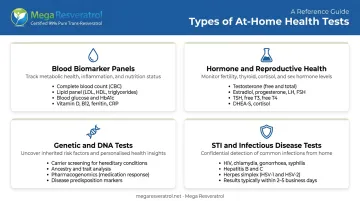
Each category serves a different health goal. The sections below walk through what to look for when evaluating kits within each type.
How to Choose the Right At-Home Health Test Kit
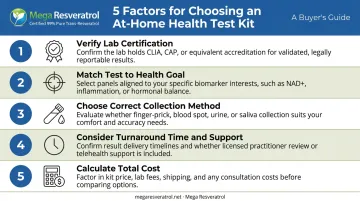
Five factors should drive every buying decision:
1. Verify lab certification first. Only purchase kits processed by CLIA-certified or CAP-accredited labs. CLIA certification indicates the lab meets federal quality, accuracy, and safety standards; CAP accreditation adds a peer-inspection layer on top. If a kit doesn't disclose its lab partner or certification status, skip it.
2. Match the test to a specific health goal.
- General wellness → broad blood panel (cholesterol, metabolic markers, thyroid, vitamins)
- Family history of heart disease → panel including hsCRP, lipid fractions, homocysteine
- Chronic condition monitoring → condition-specific repeat tests
- Genetic planning → whole-genome sequencing (Essential tier minimum)
3. Pick a collection method you can actually perform correctly. Not every sample type is equal in difficulty:
- Finger-prick blood: requires accurate technique; an incorrect draw produces an invalid sample
- Saliva swabs: simpler, well-suited for DNA tests
- Urine and STI swabs: straightforward for most people at home
4. Factor in turnaround time and result support. Speed matters for infectious disease concerns: prioritize 2–5 day turnaround. For hormone panels or any test where abnormal results may be alarming without context, choose a brand that includes physician review or clinical follow-up. Without that support, a flagged result can send you to a specialist visit that costs more than the kit itself.
5. Calculate total cost, not just kit price. Three costs are easy to overlook:
- Ongoing membership fees (Nebula Genomics charges annual fees after the first year)
- Retest frequency if you're monitoring a condition over time
- Result interpretation: a $79 kit with no support can cost more in follow-up visits than a $149 kit with clinical guidance included
Conclusion
The best at-home health test kit in 2026 is the one that matches your specific goal — cardiovascular risk monitoring, hormone tracking, STI screening, or long-term genetic insight — and comes from a lab that meets CLIA and CAP standards.
At-home testing works best as part of a proactive strategy: establish a baseline, identify risk areas, then take targeted action. If your results flag elevated cardiovascular markers — high hsCRP, elevated LDL, or inflammation signals — Mega Resveratrol's pharmaceutical-grade trans-resveratrol is trusted by over 100 universities and research institutes for cardiovascular health support. The company was founded in 2007 by Doron Efrat after he survived a heart attack and was diagnosed with LP(a), a genetic cardiovascular condition — so the focus on heart health is built into its DNA.
Whatever your results show, treat them as the starting point for a conversation with your healthcare provider — not the final word.
Frequently Asked Questions
Which test is best for a full body checkup?
A comprehensive blood panel covering lipids, metabolic markers, thyroid, CBC, and key vitamins — from providers like Everlywell or LetsGetChecked — is the closest at-home equivalent. Pair it with an annual physician visit, since panels capture biomarkers but not physical examination findings.
Are home health tests accurate?
Kits processed through CLIA-certified or CAP-accredited labs use the same quality standards as clinical laboratories and produce reliable results. Accuracy also depends on correct sample collection at home — always follow instructions precisely, and confirm any concerning results with a physician before acting on them.
Do I need a doctor's prescription to order an at-home health test kit?
Most kits — blood panels, hormone tests, STI screens — can be ordered without a separate doctor visit. Many platforms use an affiliated clinician to authorize the order on your behalf. State laws vary, so check availability in your state before purchasing.
How long does it take to get results from an at-home health test?
Most results arrive within 2–7 business days after lab receipt — blood panels and hormone tests on the faster end, DNA/whole-genome tests on the slower end. Factor in shipping time when speed matters.
What is the difference between a self-test and a self-collection test?
Self-tests (pregnancy tests, COVID rapid tests) give instant results at home with no lab involvement. Self-collection tests require mailing your sample to a certified lab, with results returned digitally — these are more comprehensive and clinically accurate for tracking ongoing health markers.
Can at-home health test results replace a doctor's visit?
No. Abnormal results should always be followed up with a licensed healthcare provider who can interpret findings in full clinical context. At-home tests are built for screening and monitoring — not diagnosis.