The two come from the same fruit but from different anatomical parts, and that matters more than it might seem. This article covers exactly what grape skin extract is, which bioactive compounds it contains, what the research says about its health effects, and how it compares to grape seed extract — including what to look for if you're considering it as a supplement.
Key Takeaways
- Grape skin extract is derived from the outer layer of Vitis vinifera grapes and contains resveratrol, anthocyanins, quercetin, catechins, and tannins.
- Resveratrol, concentrated in grape skins rather than seeds or pulp, is the most studied compound for cardiovascular and longevity effects.
- Grape skin extract differs from grape seed extract: skins lead in resveratrol and anthocyanins, while seeds are dominated by proanthocyanidins (OPCs).
- Research on cardiovascular and glycemic benefits is promising but largely preclinical — human trials remain limited.
- Product quality varies widely; look for third-party tested, GMP-certified manufacturers.
What Is Grape Skin Extract?
Grape skin extract is a concentrated botanical extract derived from the outer skin of Vitis vinifera grapes. During winemaking or juice production, the skins are separated from the pulp and pressed — leaving behind solid material called pomace, which accounts for roughly 20–30% of total grape mass and includes skins, seeds, and stems. Grape skin extract isolates the skin fraction specifically, capturing its polyphenolic compounds in concentrated form.
This makes grape skin extract a particularly sustainable ingredient: the raw material is largely a byproduct of existing wine and juice production, rather than a crop grown exclusively for supplement use.
Extraction and Processing
Producing the extract involves drying the grape pomace (or skin fraction), then drawing out the active polyphenols using water, ethanol, or solvent-based techniques. Extraction method matters significantly — a study on Kyoho grape skins found that accelerated extraction using 49% ethanol for 15 minutes recovered 15.24 mg GAE/g total phenolics and 346.68 mg CGE/100g anthocyanins, compared to 13.29 mg GAE/g and 294.55 mg CGE/100g using conventional 5-hour extraction. These variables directly influence which compounds end up in the finished extract — and at what concentrations.
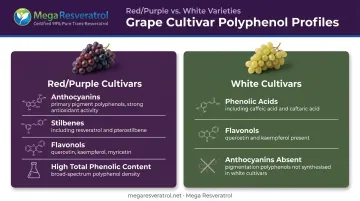
Red and purple grape varieties — such as Cabernet Sauvignon and Merlot — are the most commonly used for extraction because their skins contain substantially higher anthocyanin concentrations than white varieties. The polyphenol profiles differ notably by color:
- Red/purple cultivars: Rich in anthocyanins, stilbenes, and flavonols; higher total phenolic content
- White cultivars: Contain phenolic acids and flavonols, but lack the anthocyanin-driven pigmentation of red skins
- Resveratrol content: Direct red-vs-white comparisons in the published literature are less conclusive — the anthocyanin advantage for red skins is the most consistently documented difference
Key Bioactive Compounds in Grape Skin Extract
Grape skin extract's health potential comes from a matrix of polyphenols working together, not any single compound. The primary ones:
- Resveratrol — a stilbene polyphenol concentrated in the skin
- Anthocyanins — the red and purple pigments with potent antioxidant activity
- Quercetin — a flavonol with anti-inflammatory properties
- Catechins and condensed tannins — present in skins, though more abundant in seeds
Resveratrol
Resveratrol is produced by the grape vine as a stress response — triggered by fungal infection, UV exposure, or physical injury. It belongs to the stilbene class of polyphenols, and peer-reviewed reviews report its concentration in grape skin at approximately 50–100 µg/g — significantly higher than in seeds or pulp.
It carries the most substantial research behind it: cardiovascular protection, anti-inflammatory signaling, and potential longevity effects through SIRT1 pathway activation. Cultivar, growing conditions, and stress exposure all influence final resveratrol content — meaning concentration varies widely across grape varieties and harvests.
That variability matters for supplementation. Whole grape skin extract delivers resveratrol alongside other polyphenols, but at unpredictable concentrations. Mega Resveratrol provides pharmaceutical-grade trans-resveratrol standardized to a minimum of 99% purity, independently lab-tested per batch, for those who need a consistent, measurable dose.
Anthocyanins
Anthocyanins give grape skins their deep red, purple, and blue colors. Research across 24 grape cultivars found that skin malvidin concentrations ranged from 1.40 to 7.09 mg/g skin — a more than fivefold variation depending on variety. Specialized teinturier cultivars reached as high as 50 mg total anthocyanins per gram of fresh skin.
These compounds function as potent antioxidants and have been studied for anti-inflammatory, neuroprotective, and vascular effects. Bioavailability and metabolite activity are active areas of research, and direct translation to clinical claims requires caution.
Quercetin and Other Flavonoids
Quercetin works synergistically with resveratrol and anthocyanins, amplifying the overall antioxidant and anti-inflammatory effect of the extract. One direct skin-seed analysis measured it at 1.25 mg/g dry weight in Cabernet Sauvignon skin extract — a meaningful concentration given how it interacts with the broader polyphenol matrix.
Tannins (condensed proanthocyanidins) round out the profile. Present in grape skins, they contribute astringency and show antimicrobial and antioxidant activity in lab settings — though they're more concentrated in the seeds than the skin.
Potential Health Benefits of Grape Skin Extract
Research on grape skin extract is active and promising — but a significant portion of the evidence comes from animal models and small human trials. Readers should consider this context carefully and consult a healthcare provider before supplementing.
Cardiovascular Health Support
The most-studied application for grape skin extract involves cardiovascular markers. In spontaneously hypertensive rats, the grape skin extract ACH09 helped limit disruption to blood pressure, oxidative status, and lipid profile. Research on grape polyphenols more broadly points to several mechanisms:
- Reducing LDL oxidation
- Supporting healthy endothelial function (the inner lining of blood vessels)
- Improving vascular tone through antioxidant and anti-inflammatory pathways
These remain animal and preclinical findings. They don't establish that supplementing will produce the same outcomes in humans — that evidence gap applies to all the areas covered below.
Antioxidant and Anti-Inflammatory Activity
Grape skin extract functions as a broad-spectrum antioxidant across multiple polyphenol classes simultaneously. Resveratrol, anthocyanins, and quercetin each neutralize free radicals through different chemical mechanisms, which may offer broader coverage than single-compound antioxidants.
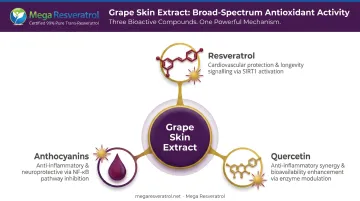
Oxidative damage drives cellular aging and chronic disease progression. Reducing that stress is one pathway through which these compounds may support long-term health — though the strength of that effect in humans is still being studied.
Blood Sugar Regulation
Some research suggests grape skin polyphenols may support glycemic control. In alloxan-induced diabetic mice, the ACH09 grape skin extract (at 200 mg/kg/day orally) produced lower blood glucose, improved HOMA index markers, and increased insulin receptor and GLUT4 content in tissues. A 2024 study of Croatian white-grape skin extracts also reported antidiabetic enzyme activity in vitro.
Neither constitutes a human supplementation trial. The glycemic findings are early-stage but mechanistically plausible — not yet ready for clinical application.
Skin and Collagen Health
Anthocyanins and resveratrol may support collagen synthesis and protect skin cells from UV-induced oxidative damage. That's why grape skin extract appears in both dietary supplements and topical skincare formulations — a dual-use application that reflects the extract's versatility.
Key proposed mechanisms for skin health include:
- Stimulating collagen synthesis in dermal cells
- Neutralizing UV-generated free radicals before they damage skin tissue
- Reducing inflammation that accelerates visible aging
The skin-health evidence is promising but still preliminary, following the same pattern as the cardiovascular and glycemic research above.
Grape Skin Extract vs. Grape Seed Extract: Key Differences
Grape skin and grape seed extracts come from the same fruit — but they deliver very different compounds, and they're not interchangeable.
| Feature | Grape Skin Extract | Grape Seed Extract |
|---|---|---|
| Primary compounds | Resveratrol, anthocyanins, quercetin | Proanthocyanidins (OPCs), catechins |
| Anthocyanin content | High (concentrated in skins) | Very low |
| Resveratrol content | Present and significant | Minimal |
| Total phenolics | Generally 2–3x lower than seed | Higher total phenolic burden |
| Main research focus | Cardiovascular, antioxidant, glycemic (preclinical) | Blood pressure, venous circulation |
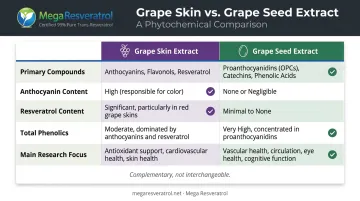
A direct analytical comparison across four cultivars found that skin total phenolics were approximately 2–3 times lower than seed extracts, while anthocyanins were concentrated in skins. This confirms the extracts are complementary, not interchangeable.
Because they're complementary, some supplement products combine both extracts in one capsule. That's not inherently problematic — but it doesn't guarantee adequate concentrations of either compound. Check labeled amounts carefully, and favor independently tested products over combination formulas that don't disclose individual concentrations.
Side Effects and Safety Considerations
Grape skin extract is generally well-tolerated at typical supplemental doses. Reported side effects are mild and most common at higher doses:
- Digestive discomfort or nausea
- Headache (less commonly reported)
Key drug interaction concerns:
- Blood thinners (warfarin, aspirin): Resveratrol has enhanced warfarin anticoagulation in animal studies; the interaction hasn't been confirmed in human trials, but the risk is plausible
- Cytochrome P450 enzymes: At high doses, purified resveratrol (1g/day for 4 weeks) inhibited CYP3A4, CYP2D6, and CYP2C9 while inducing CYP1A2 in 42 adults, which affects the metabolism of a wide range of common medications
Anyone taking prescription medications should discuss grape skin extract with their healthcare provider before starting supplementation. For pregnant or breastfeeding individuals, safety data is limited — supplemental use is not recommended without direct medical guidance.
How to Use Grape Skin Extract as a Supplement
Grape skin extract is available in capsule, powder, and liquid extract forms. No regulatory body has established a Daily Value, recommended intake, or tolerable upper limit for it specifically, which makes choosing the right product more important than hitting a precise dose.
Clinical research doses vary widely depending on the study and compound being examined. The most cited reference points for resveratrol come from purified compound research: 1 g/day in a 4-week pharmacokinetic study, with GI effects emerging at 2–5 g/day. Those figures apply to isolated resveratrol, not whole grape skin extract.
What to look for when choosing a product:
- Manufactured in a GMP-certified, FDA-regulated facility
- Independent third-party lab testing with a publicly available Certificate of Analysis
- Clearly labeled compound concentrations (not just "proprietary blend")
- No excessive fillers or excipients padding the capsule weight
Without standardized regulations, quality across grape skin extract products varies widely. Third-party verification is the only reliable way to confirm that labeled anthocyanin or resveratrol content actually matches what's in the capsule. Brands that publish Certificates of Analysis from independent US laboratories — and manufacture without excipients — are the clearest signal of a trustworthy product.
Frequently Asked Questions
Does grape skin extract contain resveratrol?
Yes. Grape skins are one of the primary natural food sources of resveratrol — a stilbene polyphenol that the vine produces as a stress response. Grape skin extract concentrates this compound alongside anthocyanins and other polyphenols; the seed and pulp contain far less resveratrol by comparison.
What is the difference between grape skin extract and grape seed extract?
These two extracts differ primarily in their active compounds. Grape skin extract is rich in resveratrol and anthocyanins; grape seed extract is dominated by proanthocyanidins (OPCs). Both offer antioxidant activity, but through different compounds and potentially different health pathways.
What does grape skin extract do for your body?
The primary studied effects include antioxidant protection, cardiovascular support (endothelial function, LDL oxidation, blood pressure), and potential anti-inflammatory activity. Most human evidence remains limited — the more robust findings come from animal models and in vitro research.
What are the side effects of grape skin extract?
It's generally well-tolerated, but high doses may cause mild gastrointestinal symptoms. It can also interact with blood thinners and medications processed by cytochrome P450 liver enzymes, so consult your doctor before starting supplementation.
How much resveratrol is in grape skin extract?
Raw grape skins contain approximately 50–100 µg/g resveratrol, though this varies by cultivar, stress exposure, and harvest conditions. Commercial extract products vary further based on extraction method and standardization. Product-specific Certificates of Analysis are the only reliable way to confirm actual content.
Is grape skin extract the same as red wine extract?
They overlap significantly. Red wine derives much of its polyphenol content from grape skins during fermentation, so the compound profiles are similar. Grape skin extract is a more concentrated, alcohol-free form that isolates those beneficial compounds without the ethanol present in wine-derived extracts.