
The right supplements can support energy, skin, joints, heart health, and cognitive sharpness during this transition. This guide covers the evidence-backed options worth considering and how to tell a quality product from a marketing gimmick.
TL;DR
- Aging in your 40s is driven by oxidative stress, inflammation, telomere shortening, and hormonal decline
- Focus on resveratrol, collagen, vitamin D3, omega-3s, and CoQ10/NAD+ precursors—the best-researched options
- Prioritize purity, third-party testing, and bioavailability as much as the ingredient itself
- Pair supplements with strength training, solid nutrition, and quality sleep for best results
Understanding Aging in Your 40s: What's Happening in Your Body
Several biological processes converge during this decade. Inflammaging (chronic, low-grade inflammation) predicts cardiovascular disease, frailty, and cognitive decline. Elevated hs-CRP and IL-6 levels are linked to heart disease risk independent of other factors, according to a review on inflammaging published in Immunity & Ageing.
Hormonal shifts compound the problem:
- Women approach perimenopause; declining estrogen is tied to higher oxidative stress and pro-oxidant biomarkers
- Men experience gradual testosterone decline (about 19% over 20 years, even with stable weight), per research on secular testosterone decline
- Both sexes experience telomere shortening and mitochondrial slowdown that cut cellular energy production

Lifestyle effort alone does not reverse these shifts. Targeted supplementation, paired with lifestyle changes, can help offset them—which is exactly what the next section covers.
Top Anti-Aging Supplements for Your 40s
These ingredients have the strongest clinical backing for cellular, cardiovascular, skin, and cognitive support in midlife.
Resveratrol
Resveratrol is a polyphenol antioxidant studied for its effects on oxidative stress, inflammation, and vascular function.
Human trials are mixed: some show blood pressure improvements, others show none. Tolerability across studies has generally been good, according to a comprehensive review of resveratrol's health effects.
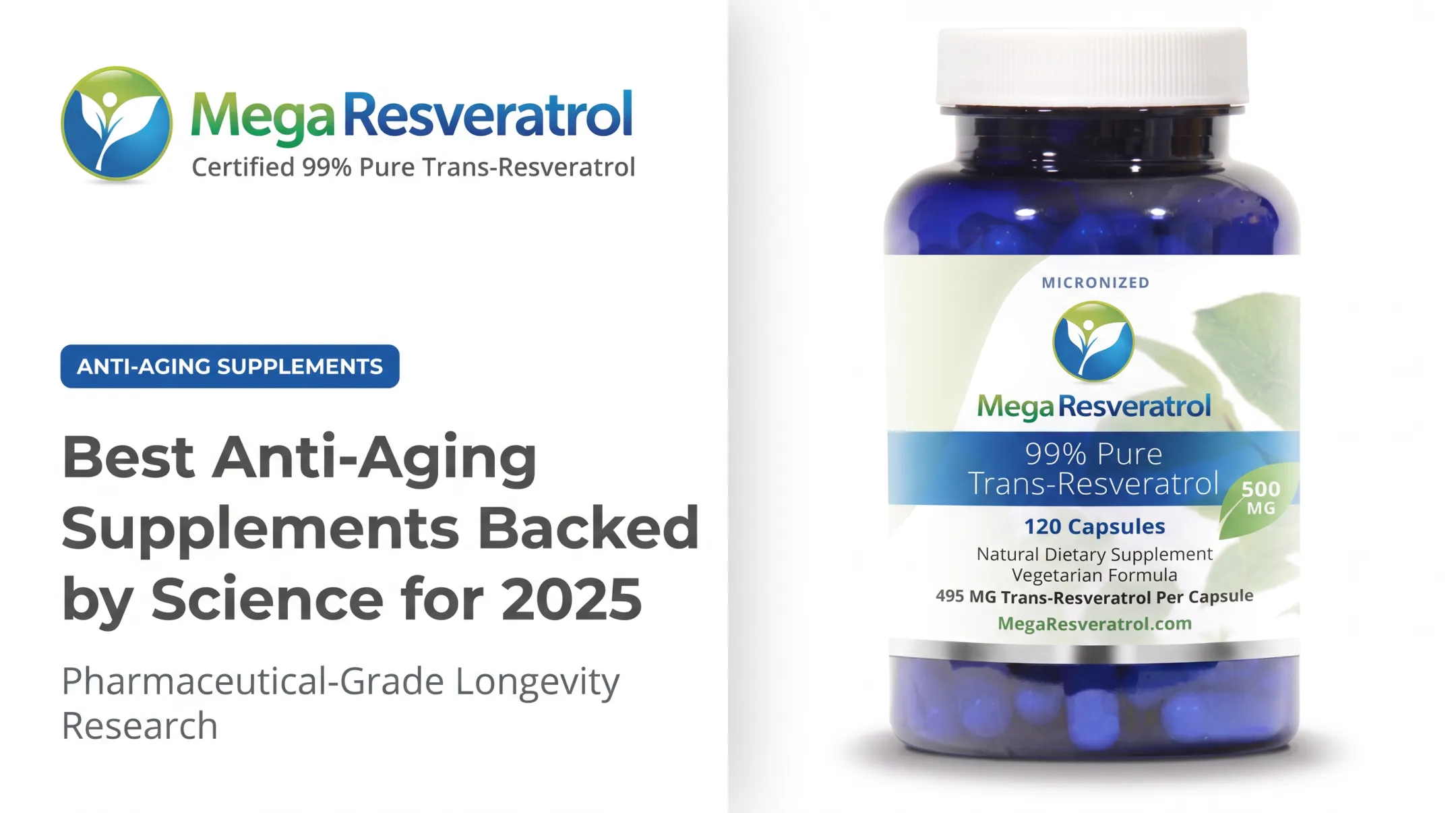
Mega Resveratrol was founded in 2007 after its founder survived a heart attack and couldn't find a resveratrol product purer than 10-20%. That frustration led to a line of 99% pure, micronized, third-party lab-tested trans-resveratrol capsules, now used by more than 100 research institutions worldwide.
What sets it apart:
- Pharmaceutical-grade purity with no fillers or excipients
- Manufactured in a GMP-certified, FDA-registered facility
- Every batch independently tested by a US laboratory
| Feature | Detail |
|---|---|
| Purity/Potency | 99%+ pure trans-resveratrol, micronized under 2 microns for higher absorption |
| Formulation | No fillers, binders, or preservatives; gluten-free, non-GMO |
| Value | Four-month supply (120 capsules) for around $89.95, under 75 cents/day |

Collagen
Collagen is the structural protein behind skin elasticity, joint cushioning, and connective tissue strength. Production declines steadily after 40, showing up first as fine lines and stiffer joints.
A 16-week randomized trial combining 5 grams of hydrolyzed collagen with vitamin C reduced maximum wrinkle depth by nearly 17%, according to research published on collagen supplementation and skin aging. Note: vitamin C was present in every active arm of that study, so it's likely doing meaningful work alongside the collagen.
| Feature | Detail |
|---|---|
| Key Benefit | Skin, joint, and connective tissue support |
| Best Paired With | Vitamin C for enhanced collagen synthesis |
| Form | Hydrolyzed powder or capsules for better absorption |
Vitamin D3
Bone density accelerates its decline after 40, and vitamin D3 governs calcium absorption, immune regulation, and muscle function. Natural synthesis through skin exposure also becomes less efficient with age.
The National Institute on Aging lists 600 IU/day as a general benchmark for adults, with an upper limit of 4,000 IU/day. Vitamin D and calcium together can improve bone mineral density in some populations, though the effect on actual fracture rates is less clear.
| Feature | Detail |
|---|---|
| Key Benefit | Bone density, immune, and muscle support |
| Recommended Form | Cholecalciferol (D3) for best bioavailability |
| Best Paired With | Magnesium and healthy fats |
Omega-3 Fatty Acids
EPA and DHA are the workhorses here: anti-inflammatory, cardioprotective, and tied to cognitive performance.
In a four-month trial of overweight, sedentary adults aged 40-85, 1.25-2.5 g/day of omega-3 lowered inflammatory marker IL-6 by 10-12%, versus a 36% increase in the placebo group, according to a randomized controlled trial on omega-3 and inflammation.
Separate Framingham Heart Study data found higher omega-3 blood levels correlated with larger hippocampal volume in midlife adults, though that's an association, not proof of a causal brain benefit.
| Feature | Detail |
|---|---|
| Key Benefit | Heart, brain, and joint support |
| Source | Fish oil, or algae-based for vegetarians |
| Ideal Dose | Look for products with meaningful combined EPA+DHA content |

CoQ10 / NAD+ Precursors
Cellular energy production slows with age, contributing to fatigue and reduced heart function. CoQ10 supports the mitochondrial electron transport chain, while NAD+ precursors like NMN and NR feed metabolism and DNA repair pathways.
The Q-SYMBIO trial, involving 420 heart failure patients, found CoQ10 added to standard therapy reduced cardiovascular mortality from 16% to 9% over two years. That is strong evidence, though it applies to heart failure patients, not healthy 40-somethings.
NAD+ precursors approach the same energy problem from another angle. Mega Resveratrol's Super NMN pairs naturally with resveratrol: NMN supplies raw NAD+ material while resveratrol activates the sirtuin pathways that use it. The company's guidance suggests 250-500 mg NMN with 300-500 mg trans-resveratrol each morning, ideally with a source of healthy fat to aid absorption.
| Feature | Detail |
|---|---|
| Key Benefit | Cellular energy and heart health |
| Best For | Combating fatigue, supporting mitochondrial function |
| Consideration | Often paired with resveratrol for synergistic effect |
How to Choose High-Quality Anti-Aging Supplements
The supplement aisle is full of low-purity products hiding behind flashy labels. Skipping third-party verification is the most common and costly mistake.
Look for:
- Independent lab certification confirming purity claims, not just internal testing
- GMP-certified, FDA-registered manufacturing facilities
- Bioavailability data: micronized particle size and formulation affect how much reaches your bloodstream
- No unnecessary fillers, binders, flow agents, or preservatives
These criteria decide whether the product works. A resveratrol pharmacokinetic study found that formulation and even meal timing changed plasma exposure significantly, per research on resveratrol bioavailability. The ingredient on the label only matters if your body can actually use it.

Lifestyle Habits That Maximize Supplement Benefits
Supplements amplify results when the fundamentals are already in place.
- Strength training has a measurable anti-aging effect. NHANES data on 4,800+ adults linked 90 minutes per week to longer telomeres, equal to nearly 4 years less biological aging.
- Sleep quality drives cellular repair. Poorer sleep and shorter duration were both linked to faster telomere shortening in a longitudinal study of older adults.
- Nutrient-dense meals and hydration fuel the same cellular repair pathways your supplements target.
- Stress management protects telomere health. Chronic stress and elevated cortisol are linked to shorter telomeres and lower telomerase activity.
Conclusion
Choosing anti-aging supplements should come down to purity, research backing, and your individual health goals — not marketing claims on a bottle. Talk to a healthcare provider before starting anything new, especially if you take medications, and prioritize consistency over piling on more products.
Those same standards guide Mega Resveratrol. Since 2007, we have supplied pharmaceutical-grade, independently lab-certified supplements to consumers and research institutions, with a focus on purity you can verify—not claims on a label. Build your 40s routine around what the evidence and your clinician support, and stay consistent.
Frequently Asked Questions
What supplements should a 40-year-old take?
Resveratrol, NMN, omega-3s, collagen, and CoQ10 are foundational options with solid research behind them. The right combination depends on your individual health goals and any existing conditions.
What are the best anti-aging supplements for a 40-year-old woman?
Calcium, vitamin D3, omega-3s, and collagen are especially relevant as perimenopause approaches and estrogen decline accelerates bone and skin changes. A healthcare provider can help tailor doses to your needs.
Is resveratrol safe to take daily in your 40s?
Resveratrol is generally well-tolerated at 250-500 mg per day for healthy adults, though doses above 1 gram may cause mild stomach upset. Choose a pure, third-party-tested formulation and check for interactions if you take blood thinners.
Can supplements alone reverse skin aging?
No. Supplements like collagen support skin structure, but they work best alongside sun protection, hydration, and a balanced diet. They reinforce the basics—they don’t replace them.
How long does it take to see results from anti-aging supplements?
Most clinical trials show measurable benefits after 8-16 weeks of consistent use. Results vary by ingredient and individual factors like diet and baseline health.
Should I consult a doctor before starting anti-aging supplements?
Yes, especially if you take medications or have existing health conditions. A healthcare provider can flag interactions and help you choose appropriate doses for your situation.