
But the hype outpaces the evidence in places. Many users struggle with figuring out whether this antioxidant actually works, or whether it's just a trendy add-on to a serum label. The real answer depends heavily on how it's used, at what concentration, and whether you're applying it topically or taking it orally.
This article breaks down what resveratrol does for skin, where it stacks up against retinol, and how topical and oral approaches complement each other.
TL;DR
- Resveratrol is a plant polyphenol found in grape skins, berries, and peanuts that fights oxidative stress
- Clinical research shows it can reduce wrinkle scores and support skin firmness with consistent use
- It's gentler than retinol but works through different mechanisms, making it a solid complement rather than a substitute
- Available as topical serums/creams or oral supplements, each offering different benefits
What Is Resveratrol?
Resveratrol is a polyphenol antioxidant, technically classified as a stilbene compound. It's naturally concentrated in red grape skins, red wine, blueberries, cranberries, peanuts, and cocoa. Dark chocolate contains measurable amounts too, though far less than a purified supplement would deliver.
It shows up in skincare in two forms:
- Topical formulations — serums, creams, and treatments applied directly to skin
- Oral supplements — capsules or powders taken to support antioxidant activity throughout the body
Resveratrol isn't a miracle fix. Think of it as reinforcement for skin's existing defense systems, not a replacement for sunscreen or a stand-in for prescription-strength treatments.
Key Benefits of Resveratrol for Skin
The benefits below are grounded in dermatological research, though the strength of evidence varies by claim. Here's what's actually documented.
Antioxidant Protection Against Free Radicals
UV exposure and pollution generate free radicals that damage skin cells over time. Resveratrol neutralizes these reactive molecules through direct scavenging, helping limit cumulative cellular damage.
Oxidative stress is a major driver of visible skin aging, particularly the extrinsic kind caused by environmental exposure rather than natural chronological aging. This matters most if you live in a city, spend significant time outdoors, or deal with regular pollution exposure.
Who benefits most: People with high UV or pollution exposure from city living or frequent time outdoors.
Collagen Support and Anti-Aging
Resveratrol may help preserve existing collagen by inhibiting the enzymes that break down collagen and elastin fibers. This is a protective mechanism rather than a collagen-boosting one.
A notable 2025 trial published in Frontiers in Aging enrolled 134 healthy women over 40. Participants using combined oral and topical trans-resveratrol for 8 weeks saw wrinkle scores drop by 11.9% compared to placebo — a meaningful result for a relatively short trial window.

Best for: Adults in their 30s and beyond starting to notice fine lines or early sagging.
Calming Inflammation and Redness
Resveratrol has documented anti-inflammatory activity, which is why it's often marketed toward sensitive, reactive, or acne-prone skin.
A 2018 meta-analysis of 17 randomized controlled trials (736 participants total) found resveratrol supplementation significantly lowered inflammatory markers TNF-alpha and hs-CRP. These were blood biomarkers, not direct measurements of skin redness or rosacea symptoms. The link to visible skin calming is therefore more indirect than direct.
Ideal if: You have sensitive skin and react poorly to stronger actives like retinoids or acids.
Brightening and Hyperpigmentation Reduction
Resveratrol is thought to help even skin tone by encouraging gentle turnover and interfering with UV-triggered pigmentation pathways.
The evidence here is mixed. Animal studies show topical resveratrol reduced hyperpigmentation in UV-exposed guinea pig skin. But a separate cell study found resveratrol actually increased melanin production and tyrosinase activity under certain conditions. Brightening claims are plausible but not conclusively proven in humans yet.
Who benefits most: Those managing sun damage or post-acne marks, ideally as one part of a broader routine.
Resveratrol vs. Retinol: Which Is Right for You?
Retinol and resveratrol work through completely different pathways, which is why a head-to-head “winner” is less useful than understanding how they differ.
| Factor | Retinol | Resveratrol |
|---|---|---|
| Mechanism | Vitamin A derivative; boosts cell turnover | Antioxidant; neutralizes free radicals |
| Tolerance | Can cause irritation, peeling, sensitivity | Generally well-tolerated |
| Best for | Deep wrinkles, acne, texture | Prevention, calming, sensitive skin |
| Sun sensitivity | Increases it; nighttime use advised | Minimal documented sensitivity |

The American Academy of Dermatology notes retinol accelerates cell turnover and boosts collagen production, making it more potent for established wrinkles. Resveratrol simply doesn't work that fast or that aggressively.
There's no published head-to-head trial pitting the two against each other. A practical way to choose:
- Retinol: Better when your priority is deeper wrinkles, acne, or uneven texture — and you can tolerate a stronger active
- Resveratrol: Better for prevention, calming support, or sensitive skin that reacts to retinoids
- Both: Many people use resveratrol in the morning for antioxidant defense and retinol at night for cell turnover, which avoids stacking two intense actives at once
Topical Application vs. Oral Supplementation
Topical resveratrol delivers concentrated antioxidant action directly where it's needed. It's absorbed into the skin's outer layers and works locally.
Oral resveratrol works through a different pathway. It supports skin from within by reducing systemic inflammation and oxidative stress that affects the whole body, including the skin.
In short:
- Topical: Local antioxidant activity in the outer skin layers
- Oral: Systemic support against inflammation and oxidative stress that shows up in skin
Why diet alone falls short: Dietary research from 2024 put average resveratrol intake from food at about 787 micrograms per day. A glass of red wine has roughly 0.3 mg. Clinical trials often use 75 mg twice daily, so food sources cannot match supplemental doses.
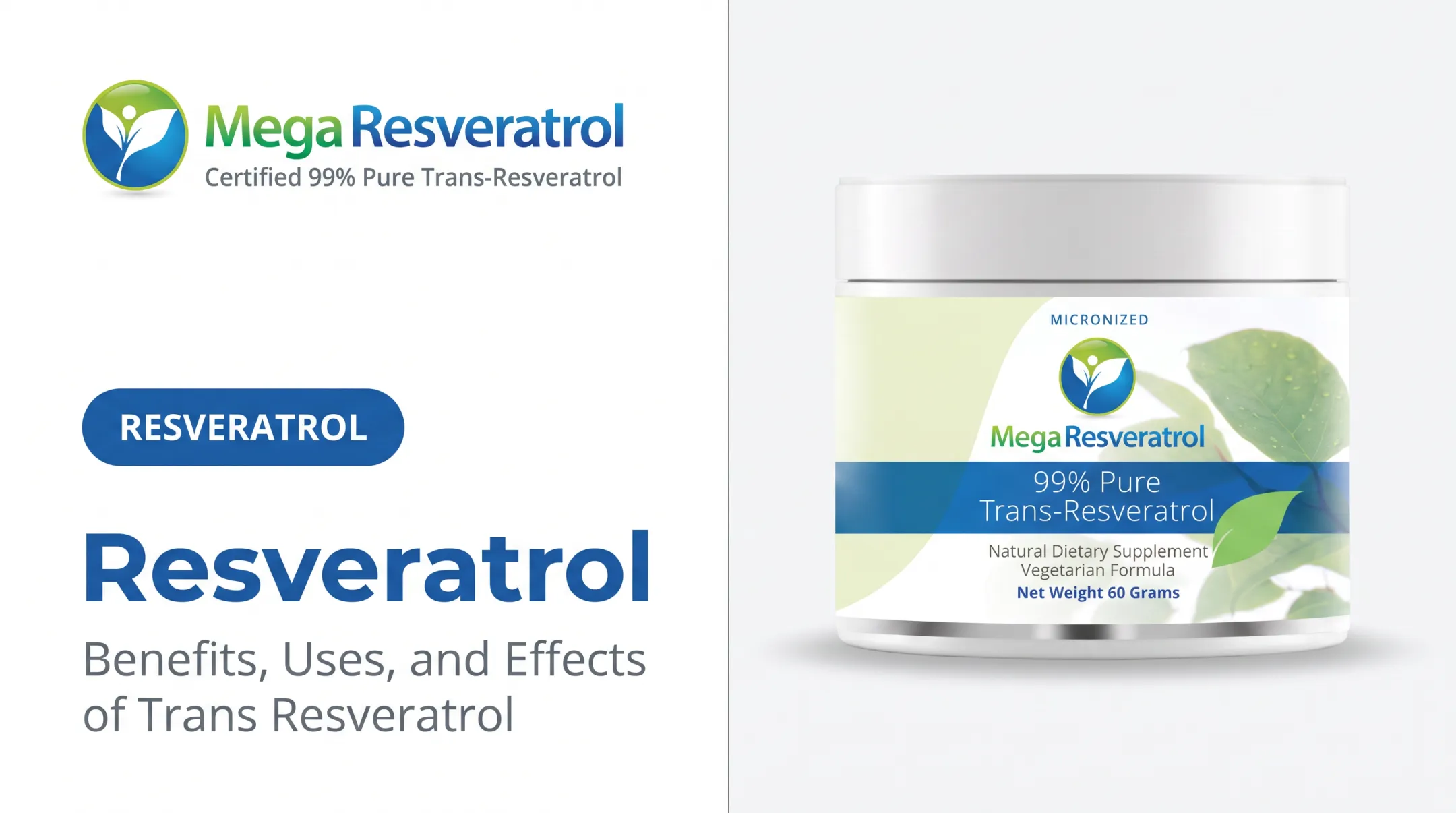
Purity and form matter for oral use. Mega Resveratrol capsules are built for that standard:
- Over 99.5% pure pharmaceutical-grade trans-resveratrol
- Independently lab-tested by U.S. facilities
- Micronized to a D-50 particle size below 1.90 µm for better absorption
- 500 mg capsules delivering more than 495 mg of active compound, with no fillers, binders, or preservatives

For skin goals, pair a topical resveratrol product for direct contact with an oral supplement for systemic support.
What Happens When Resveratrol Use Is Inconsistent
Skipping regular antioxidant protection lets free radical damage accumulate. Unlike an immediate irritant reaction, this damage builds quietly over months and years, contributing to premature aging you won't notice until it's visible.
Inconsistent use also blunts collagen-preserving effects. The 8-week and 12-week clinical timelines that showed measurable improvement assumed daily, uninterrupted use, not sporadic application whenever you remember.
A few practical notes:
- Skipping sunscreen while relying on resveratrol undercuts its effectiveness, since UV damage continues regardless of antioxidant use
- Results compound over time; stopping and restarting resets the clock
- Oral supplementation works best as a daily habit, not a short course

Frequently Asked Questions
What does resveratrol do to the face?
It neutralizes free radicals, calms inflammation, helps preserve collagen, and may support more even skin tone when applied topically. Results build gradually with consistent use.
Is resveratrol better than retinol?
Neither is universally better; they work differently. Resveratrol is gentler and antioxidant-focused, while retinol drives faster cell turnover. Many dermatologists recommend using both.
Does resveratrol help sagging skin?
It may help by protecting existing collagen and elastin from breakdown, but it works more preventatively than as a dramatic firming treatment. Don't expect facelift-level results.
Can I get resveratrol's skin benefits just from diet?
Not realistically. Food sources like red wine and grapes provide amounts far below what clinical studies use, making supplements or topical formulations more practical for noticeable effects.
How long does it take to see results from resveratrol?
Clinical trials showed measurable wrinkle improvement at 8 weeks, with more comprehensive results (firmness, texture, tone) at 12 weeks when use stayed consistent.
Are there any side effects of using resveratrol?
It's generally well-tolerated. Clinical trials reported mild, infrequent side effects like skin irritation or gastrointestinal discomfort. Pair daily use with sunscreen to support overall skin health.