
The problem? Most of that marketing outpaces the actual research. Some ingredients have solid human data behind specific outcomes. Others are still stuck in petri dishes and small pilot trials.
This guide breaks down what the science actually shows for 2025's top anti-aging supplements, and how to spot a high-purity product worth your money.
TL;DR
- Anti-aging supplements target oxidative stress, inflammation, and mitochondrial decline at the cellular level
- Top categories: resveratrol, NAD+ precursors (NMN/NR), CoQ10, collagen peptides, and omega-3s
- Look for third-party lab testing, micronization for absorption, and GMP-certified manufacturing
- Evidence varies: collagen has solid skin data; NAD+ precursors show biochemical response, limited functional proof
- Supplements support specific aging pathways; they don't replace sleep, diet, and exercise
Overview of Anti-Aging Supplements in the US Market
Anti-aging supplements target four cellular processes:
- Oxidative stress
- Chronic low-grade inflammation
- Mitochondrial decline
- Telomere shortening
The better-researched formulas slow damage at these sources rather than only addressing surface signs of aging.
The category has real financial weight. The Council for Responsible Nutrition reported $159 billion in total economic impact for the US dietary supplement industry in 2023. Consumers spent a median of $50 per month on supplements in 2024, up from $48 the year before (CRN, 2024).
Below, we rank the options with the strongest human evidence and clearest purity standards for 2025 — separating what's proven from what's still promising.
Top Anti-Aging Supplements Backed by Science for 2025
We ranked these using four criteria:
- Clinical evidence strength
- Ingredient purity and bioavailability
- Independent lab testing
- Reputation among researchers
Mega Resveratrol (Pharmaceutical-Grade Trans-Resveratrol)
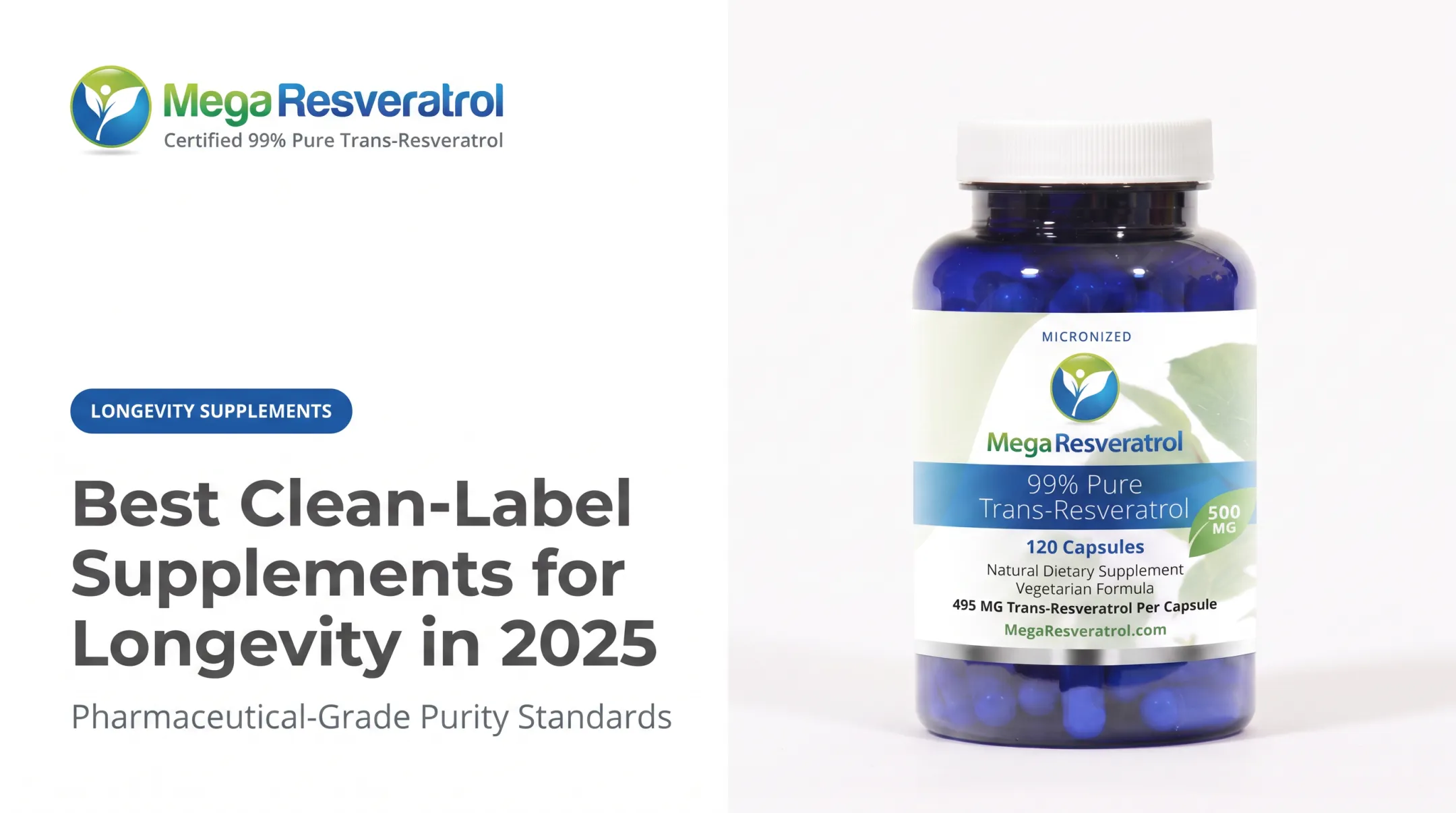
Founder Doron Efrat started this company in 2007 after surviving a heart attack and searching for a high-purity resveratrol option that didn't exist yet. Most products on the market then were only 10-20% pure, meaning he'd have needed 30-40 capsules a day for a meaningful dose. That gap is why Mega Resveratrol built its product around 99% pure trans-resveratrol, independently certified by a US lab, with zero fillers or binders. The company now supplies over 100 research institutions worldwide, including NYU, UCSF, Duke, and Columbia. On the science: a 2024 clinical review found most resveratrol research remains preclinical, with no conclusive evidence yet to recommend it broadly in healthcare settings (Brown et al., 2024). Formulation and absorption still matter more than flashy claims.
| Feature | Detail |
|---|---|
| Purity | Minimum 99% pure trans-resveratrol, independently verified |
| Absorption Technology | Micronized to D-50 under 1.90 µm for enhanced bioavailability |
| Value | Four-month supply at under 75 cents/day, no fillers or additives |
| Practical takeaway: If you're choosing a resveratrol product, ask for formulation, dose, and pharmacokinetic data, not just an "anti-aging" label. |

Collagen Peptides
Collagen is the most abundant protein in your skin, giving it structure and elasticity. Levels drop naturally with age, which is where oral collagen peptides come in. This is one of the better-supported categories on this list, though the evidence is skin-specific, not systemic. A 2021 systematic review found that 90 days of hydrolyzed collagen supplementation reduced wrinkles and improved skin elasticity (de Miranda et al., 2021). A separate 2023 review confirmed improved skin hydration with oral collagen use.
| Feature | Detail |
|---|---|
| Clinical Evidence | 2021 systematic review: reduced wrinkles, improved elasticity after 90 days |
| Best For | Skin elasticity, hydration, joint support |
| Form | Capsules, powders, or peptide blends |
| Keep expectations in check: collagen's proven benefits stop at skin outcomes. It hasn't been shown to slow cellular aging elsewhere in the body. |
CoQ10 (Coenzyme Q10)
CoQ10 fuels mitochondria, your cells' energy factories, and levels decline steadily with age. It's one of the more condition-specific supplements on this list rather than a blanket anti-aging fix. A 2023 umbrella meta-analysis found anti-inflammatory effects, though researchers urged caution in interpreting the results (Varnousfaderani et al., 2023). A separate cardiovascular review of 14 studies and over 1,000 participants found improved functional capacity in heart-failure patients, though effects on hypertension were inconclusive.
| Feature | Detail |
|---|---|
| Clinical Evidence | Meta-analysis links CoQ10 to reduced inflammation and oxidative stress markers |
| Best For | Cellular energy, skin texture, heart health |
| Typical Dosage | Commonly studied range: 100-300 mg/day |
| CoQ10 works best framed as cardiovascular and mitochondrial support, not a universal longevity pill. |

Omega-3 Fatty Acids (Fish Oil)
EPA and DHA, the two active compounds in fish oil, support heart, brain, and skin-barrier function. The longevity angle here is compelling but needs a caveat. Research has associated higher circulating omega-3 levels with healthier aging patterns in large cohort studies. A 2021 analysis of erythrocyte fatty-acid levels linked higher omega-3 status to estimated life expectancy differences (McBurney et al., 2021). That's an association from blood-level data, not proof that a fish oil capsule extends your life.
| Feature | Detail |
|---|---|
| Clinical Evidence | Higher omega-3 blood levels associated with healthier aging outcomes |
| Best For | Heart, brain, skin barrier function |
| Sources | Fish oil supplements, algae-based vegan options |
| Treat omega-3 status as one marker of healthy aging, not a lifespan guarantee from a daily capsule. |
NAD+ Precursors (NMN/NR)
NAD+ is a coenzyme your cells need for energy production and DNA repair. It declines significantly with age, which sparked strong interest in NMN and NR as boosters. The data is promising at the biochemical level, but functional outcomes remain thin. A 62-person randomized trial found that 300 mg/day of NMN for 60 days raised serum NAD+ by about 10%. It did not change walking speed, blood pressure, or insulin sensitivity (Freeberg et al., 2023). A separate NR trial in older adults raised NAD+ levels by roughly 60% over six weeks, with functional outcomes still exploratory.
| Feature | Detail |
|---|---|
| Clinical Evidence | RCTs confirm NAD+ elevation; functional benefits still under study |
| Best For | Cellular repair, metabolic health, energy |
| Considerations | Research is early-stage; dosing protocols vary by product |
| In September 2025, the FDA clarified that NMN isn't currently precluded from supplement use. That is a regulatory update, not an endorsement of anti-aging effectiveness. |

How We Chose the Best Anti-Aging Supplements
The biggest mistake consumers make is trusting a bold label claim over peer-reviewed research, or skipping past purity certifications entirely. A supplement can be legal and still contain a fraction of its labeled dose.
We evaluated each category against:
- Clinical evidence strength: human trials, not just cell studies
- Independent lab testing: third-party verification of purity and potency
- Ingredient purity and bioavailability: micronized forms, verified particle size, and no fillers
- Manufacturing certifications: GMP compliance and FDA-registered facilities
Conclusion
The best anti-aging supplement is the one backed by real clinical evidence and verified purity, tested for exactly what it claims to do—not the one with the flashiest packaging.
Talk to your healthcare provider before adding anything new, especially if you're on medication. Prioritize lab-tested, high-bioavailability formulas over trendy blends.
For resveratrol specifically, Mega Resveratrol's independently verified, pharmaceutical-grade trans-resveratrol is cited in studies at institutions from NYU to Duke—a concrete option for readers focused on cardiovascular and cellular aging support.
Frequently Asked Questions
Do anti-aging supplements actually work?
They support specific aging pathways like oxidative stress and inflammation, based on the current evidence. They work best paired with healthy sleep, diet, and exercise habits, not as a standalone fix.
What are the best scientifically proven anti-aging supplements?
Resveratrol, CoQ10, omega-3s, collagen peptides, and NAD+ precursors currently have the strongest evidence-backed track records among consumer anti-aging supplements.
What is the most effective anti-aging supplement?
There's no single "best" option. Supplements targeting cellular energy and oxidative stress, like resveratrol and CoQ10, show the strongest cardiovascular and cellular aging research so far.
What is the best supplement for getting younger-looking skin?
Collagen peptides have the clearest clinical evidence for skin elasticity and hydration. Vitamin C also supports these outcomes and is often paired with collagen formulas.
What are the best anti-aging supplements in 2025?
NAD+ boosters, resveratrol, and emerging senolytics like fisetin lead the 2025 evidence base as more human trials publish and research expands into new pathways.
What are the top 10 anti-aging supplements?
The broader category includes resveratrol, CoQ10, collagen, omega-3s, NAD+/NMN, vitamin D, vitamin C, curcumin, magnesium, and probiotics — each targeting different aspects of cellular aging.