
The problem? Purity, dosing, and formulas vary wildly between brands. Some products bury their actual trans-resveratrol content inside proprietary blends. Others use cheap, low-purity extracts that can cause unwanted GI side effects.
This guide breaks down what actually separates a pharmaceutical-grade resveratrol supplement from a diluted one, so you can shop smarter in 2026.
TL;DR
- Resveratrol is a plant polyphenol tied to antioxidant and cardiovascular support; human evidence is still emerging
- Trans-resveratrol purity, micronization, and independent lab testing matter more than milligram count alone
- Published studies typically use 250–1,000 mg/day
- Best 2026 picks prioritize purity, bioavailability, third-party testing, and value—not label hype
Overview of Resveratrol Supplements in the Health & Longevity Market
Resveratrol is a plant polyphenol found in grape skins, berries, and Japanese knotweed. It exists in two forms, cis and trans, but trans-resveratrol is the version studied in nearly all human research, largely because it's more stable and biologically active according to an NIH-indexed review.
The FDA describes the overall US dietary supplement market as exceeding $60 billion, with as many as 100,000 products on shelves as of March 2024. Reported adult supplement use has also climbed, from 51.8% to 61.4% of US adults between 2011 and 2023.
A specific resveratrol market growth figure isn't available from verified sources, but the demand signal is clear: this is a crowded, competitive category where label claims often outrun the evidence behind them.
That's why the following picks were chosen for purity standards, transparency, and third-party verification, not the biggest number on the front label.
Best Resveratrol Supplements for 2026
These 2026 picks were ranked on four practical criteria:
- Trans-resveratrol purity
- Independent lab testing
- Bioavailability technology
- Value per serving
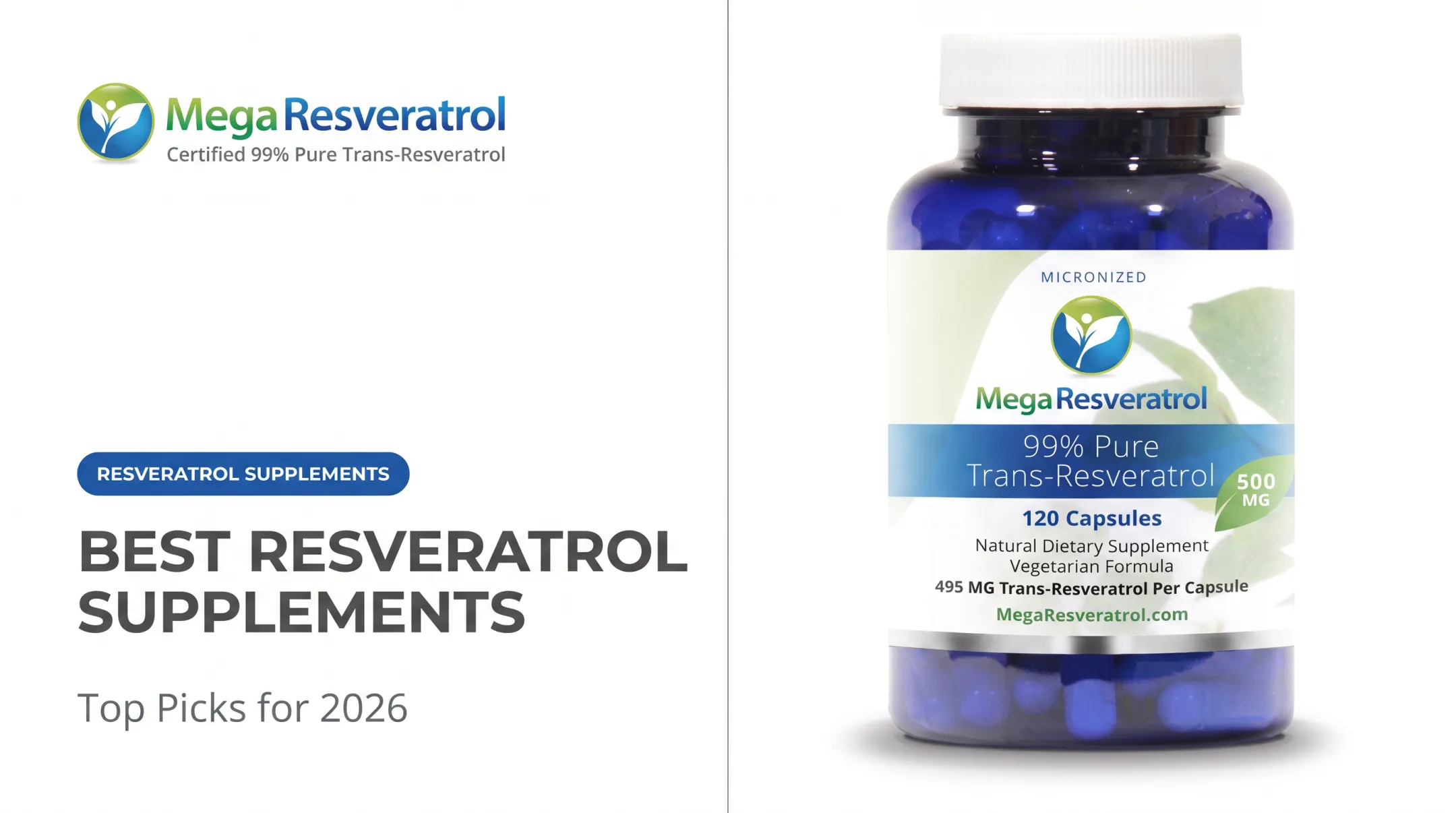
Mega Resveratrol Pure Trans-Resveratrol
Mega Resveratrol has been making pharmaceutical-grade supplements since 2007. CEO Doron Efrat founded the company after a heart attack and an LP(a) diagnosis sent him searching for a natural preventative option. He wasn't satisfied with the 10-20% purity products on the market at the time. Today, the company supplies over 100 universities and research institutes worldwide, including NYU, UCSF, Duke, and Columbia. What sets it apart:
- 99%+ pure micronized trans-resveratrol, sourced from Japanese knotweed
- Particle size under 2 microns (D-50: below 1.90 microns) for higher absorption
- Zero excipients, fillers, or binders
- Every single batch independently lab-tested for purity in the US
Key specs at a glance:
Category Details Purity & Form 99%+ trans-resveratrol, micronized to under 2 microns for up to 1000% better absorption vs. standard particles Testing & Certifications Independent US lab-tested every batch; GMP-certified, FDA-registered facility (Reg. No. 12687639882); NY State Board of Pharmacy licensed Value 120-capsule bottle ($89.95) works out to under $0.75/day for a four-month supply; no fillers or additives

Toniiq Resveratrol 1000
Toniiq keeps things simple with a single-ingredient formula. It's standardized to 98% trans-resveratrol and offered in flexible 500 mg or 1,000 mg doses. What sets it apart:
- Dosing that mirrors what's used in most published research
- Published lab testing results
- Competitive per-serving cost across both dose options
Key specs at a glance:
Category Details Purity & Form 98% trans-resveratrol, standard capsule format Testing & Certifications Third-party lot testing for microbiology, heavy metals, and potency; GMP-certified facility Value Roughly $0.56–$1.11 per serving depending on dose selected
ProHealth Longevity Trans-Resveratrol Plus
ProHealth runs a catalog of over 100 longevity-focused supplements, and their resveratrol line comes in both capsule and micronized powder formats. What sets it apart:
- 1,000 mg per serving—the highest standard dose among top brands
- Includes a proprietary absorption-support blend (quercetin, BioPerine, green tea extract)
Key specs at a glance:
Category Details Purity & Form 1,000 mg trans-resveratrol (98%+) plus a 420 mg proprietary polyphenol blend Testing & Certifications Third-party tested, FDA-regulated GMP facility Value About $1.04/serving at $31.08 for 30 servings—the most clearly documented pricing in this list

OMRE NMN + Resveratrol
OMRE is a boutique longevity brand that pairs resveratrol with NMN, a NAD+ precursor, aiming for a combined anti-aging stack rather than a standalone resveratrol product. What sets it apart:
- Transparent, recently-dated certificates of analysis published online
- BioPerine included to support absorption
Key specs at a glance:
Category Details Purity & Form 500 mg micronized trans-resveratrol (98%) + 500 mg NMN + BioPerine Testing & Certifications Third-party tested for dose, purity, and contaminants; public COAs; GMP-certified US facilities Value Highest cost per serving in this list, around $2.30
Thorne Resveratrol Complex
Thorne's formula combines trans-resveratrol with trans-pterostilbene, curcumin, and quercetin phytosomes, using time-release matrix technology. What sets it apart:
- NSF Certified for Sport status makes it a safer pick for competitive athletes
- Phytosome delivery designed for sustained bioavailability
Key specs at a glance:
Category Details Purity & Form 100 mg trans-resveratrol within a multi-polyphenol phytosome blend Testing & Certifications Third-party tested; NSF Certified for Sport (verify current product listing) Value Premium pricing (~$1.93–$2/serving) for a comparatively lower resveratrol dose
How We Chose the Best Resveratrol Supplements
The biggest mistake buyers make? Focusing only on milligram count. A "1,000 mg resveratrol" label means little if it doesn't specify the trans-resveratrol percentage or whether the dose is diluted with fillers.
We evaluated each product against these factors:
- Trans-resveratrol standardization – What percentage of the extract is actually the bioactive trans form?
- Independent lab certification – Is testing done by a third party, and is it documented?
- Manufacturing certifications – Is the facility GMP-compliant and FDA-registered?
- Excipients and fillers – Does the capsule contain anything beyond the active ingredient?
- Cost-per-serving value – What does a day's dose actually cost you?

The NIH's Office of Dietary Supplements notes that GMP compliance addresses identity, purity, strength, and composition — but certification seals don't guarantee safety or effectiveness. Treat these credentials as a quality screen, not proof of a health outcome.
Conclusion
There's no single "best" resveratrol supplement for everyone. The right choice depends on your health goals, your budget, and how much you trust a brand's purity claims.
Before buying, look for:
- A recent, publicly available certificate of analysis
- Clear trans-resveratrol percentage (not just total extract weight)
- GMP and FDA facility documentation
Talk to your doctor before starting any new supplement, especially if you take blood thinners or diabetes medication.
If verified purity matters most, Mega Resveratrol is a dependable starting point: 99%+ pharmaceutical-grade trans-resveratrol, independent US lab testing on every batch, and nearly two decades supplying major research institutions.
Frequently Asked Questions
What is the most effective form of resveratrol?
Trans-resveratrol is the most researched, stable, and bioavailable form of the compound. Look for products standardized to at least 98-99% trans-resveratrol purity for the best results.
What is the downside of resveratrol?
The most common issue is GI discomfort at higher doses, including loose stools or nausea. It may also interact with blood thinners or blood sugar medications, so check with your doctor first.
Is it worth taking a resveratrol supplement?
Evidence is promising but still developing, with mixed results across clinical trials. It's reasonable as a complement to a healthy lifestyle, not a replacement for one.
What is the best dose of resveratrol supplement to take daily?
Most human studies use doses between 250 mg and 1,000 mg per day. Higher doses within that range raise the risk of GI side effects like diarrhea.
Can I get enough resveratrol from food alone?
Not realistically. Dietary sources like red grapes and berries provide only tiny fractions of a milligram per serving, far below the amounts used in supplements.
How do I know if a resveratrol supplement is high quality?
Check for independent lab testing, GMP facility certification, and a clearly stated trans-resveratrol percentage. Avoid products that only list "resveratrol extract" without specifics.