
Since 2003, researchers have published thousands of papers probing exactly how resveratrol interacts with sirtuins like SIRT1. Some findings support the excitement. Others, including a 2020 CRISPR study and a major mouse lifespan trial, complicate it significantly. If you're considering resveratrol for healthy aging, you need both the mechanism and the honest state of the evidence.
This article covers sirtuin biology, what resveratrol actually does at the molecular level, what human trials show, and how to evaluate supplement quality before you buy.
Key Takeaways
- Sirtuins (SIRT1–7) are NAD+-dependent enzymes tied to DNA repair, metabolism, inflammation, and lifespan since 1999
- Resveratrol was named a SIRT1 activator in 2003; later assays and a 2020 CRISPR study cast doubt on direct activation
- Human trials favor cardiovascular and inflammation benefits over proven lifespan extension
- Purity and particle size decide whether a resveratrol supplement delivers any measurable effect
What Are Sirtuins and Why Do They Matter for Longevity
What Are Sirtuins and Why Do They Matter for Longevity?
Sirtuins are NAD+-dependent deacetylase enzymes. In plain terms, they use NAD+ as fuel to strip chemical tags off proteins, controlling gene expression, DNA repair, and metabolic regulation throughout the body.
Mammals have seven sirtuins (SIRT1-7), each with a distinct job:
- SIRT1 — nucleus and cytosol; regulates metabolism, stress response, and autophagy
- SIRT3 — mitochondria; controls fatty-acid oxidation and oxidative-stress defense
- SIRT6 — nucleus; manages genomic stability and inflammation
- SIRT2, 4, 5, 7 — specialized metabolic and structural roles outside the main longevity pathways
SIRT1, SIRT3, and SIRT6 get the most attention in longevity research because their functions map directly onto hallmarks of aging: DNA damage accumulation, metabolic decline, and chronic low-grade inflammation.

Sirtuin activity depends on NAD+ availability, and NAD+ levels fall with age. A 2020 review of aged-liver studies commonly reports declines of roughly 10% to 50%, though results vary by tissue and study design. Less NAD+ means less fuel for sirtuins to do their job.
The field traces back to Kaeberlein, McVey, and Guarente's 1999 MIT study, which showed that increasing yeast SIR2 extended replicative lifespan. That work set up Sinclair's 2003 Harvard finding that resveratrol activated SIR2's mammalian counterpart, SIRT1.
How Sirtuin Activity Naturally Declines With Age
Several overlapping factors erode sirtuin function over time:
- Oxidative stress depletes cellular resources needed for repair processes
- Chronic inflammation consumes NAD+ that sirtuins would otherwise use
- Mitochondrial dysfunction reduces the energy available for sirtuin-dependent repair
- Cellular senescence accumulates dysfunctional cells that resist normal regulation
None of these act alone. They reinforce each other, and the decline compounds over decades.
The Resveratrol-Sirtuin Connection: What the Science Actually Shows
The original 2003 Howitz study proposed that resveratrol binds SIRT1 directly and activates it, an allosteric mechanism requiring specific hydrophobic amino acids. The paper reported yeast lifespan extension of up to 70%. It was a landmark finding that launched an entire industry.
Then the picture got murkier.
The 2009-2010 reevaluation. Beher et al. (2009) found resveratrol didn't activate SIRT1 when tested with a natural, non-fluorescent peptide.
Pacholec et al. (2010) went further in the Journal of Biological Chemistry, showing that resveratrol only appeared to activate SIRT1 because of a fluorescent tag used in early assays. Tested with the native protein, the activation disappeared.
The 2020 CRISPR study. A genome-wide screen in Molecular Cell found that resveratrol induced replicative stress and depleted nucleotide pools in human cells, an effect entirely independent of SIRT1. That points away from sirtuin activation and toward a different cellular mechanism.
The mouse lifespan data. The NIA's Interventions Testing Program tested resveratrol in genetically diverse mice at doses of 300 and 1,200 ppm. Result: no significant survival benefit for males or females.

So does resveratrol do anything useful? Yes, just probably not through the mechanism originally proposed.
Animal studies show resveratrol activates AMPK (an energy-sensing pathway) and can raise skeletal-muscle NAD+ levels. These indirect effects, combined with resveratrol's antioxidant and anti-inflammatory properties, likely explain most of its real-world benefit.
The honest takeaway: resveratrol appears to support cellular health through several overlapping pathways, not by flipping a single "sirtuin switch."
Proven and Suggested Health Benefits of Resveratrol
Cardiovascular Support
Human trials show mixed but promising cardiovascular results. A review of randomized trials found doses above 150 mg/day associated with reduced systolic and diastolic blood pressure. One acute 300 mg trial in hypertensive participants improved flow-mediated dilation (a marker of endothelial function) in women. Blood pressure itself did not shift significantly in that same trial.
Anti-Inflammatory Effects
A 2018 meta-analysis of randomized trials found resveratrol supplementation significantly reduced two key inflammatory markers: TNF-alpha and hs-CRP. The proposed mechanism involves suppression of NF-κB signaling, though this specific pathway is better established in cell and animal studies than in direct human trials.
Antioxidant Activity
Resveratrol shows antioxidant effects largely through animal and cell-based research, including normalization of mitochondrial superoxide dismutase activity. Human data on these specific pathways remains limited.
Neuroprotective Potential
Preclinical research suggests resveratrol may reduce amyloid-beta aggregation and support amyloid clearance, relevant to brain aging research. A 2017 review outlined these mechanisms. A subsequent systematic review of clinical trials found the human evidence too heterogeneous and short-term to confirm meaningful cognitive benefit.
Why Purity and Bioavailability Determine Whether Resveratrol Works
Here's the part most marketing skips: raw trans-resveratrol has terrible bioavailability. A 2015 pharmacokinetic study gave healthy volunteers a single 500 mg tablet. Roughly 75% was absorbed, but calculated bioavailability of the parent compound came in under 1%; the liver converts most of it into glucuronide and sulfate metabolites almost immediately (2015 pharmacokinetic study).
Pharmacokinetics is only half the story. Many commercial products are diluted with fillers, and purity has long varied by brand, which muddies both trial results and real-world outcomes.
Micronization addresses part of this. Reducing particle size increases surface area, which improves how much resveratrol gets absorbed before it's metabolized away. A phase I pilot study of micronized resveratrol found plasma concentrations 3.6-fold higher than published exposure from standard, non-micronized doses at equivalent quantities.
Those same purity and absorption limits showed up in a personal way for Doron Efrat. After surviving a heart attack in 2003 and a diagnosis of LP(a), a genetic cardiovascular condition affecting roughly 70,000 Americans, he spent a year looking past statins for other options.
He found resveratrol in 2004, but products on the shelf were only 10–20% pure. A meaningful dose meant 30–40 capsules a day, with predictable GI consequences.
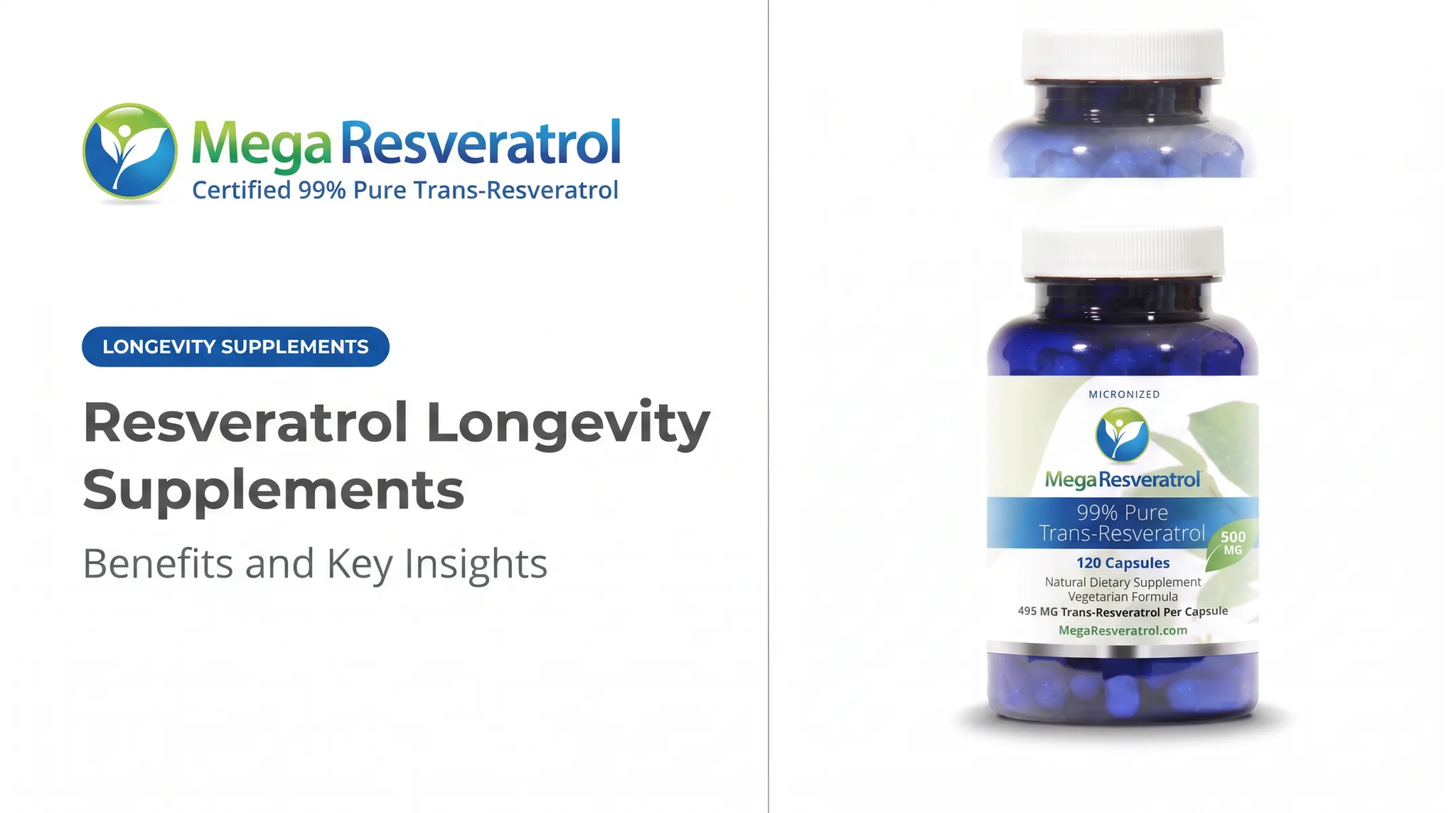
That frustration led to Mega Resveratrol in 2007. The company's trans-resveratrol capsules are:
- 99% to over 99.5% purity, certified batch by batch by independent U.S. laboratories
- Micronized to a median particle size (D-50) under 1.90 µm (standard resveratrol runs about 170–220 µm)
- Zero excipients: no fillers, binders, or preservatives—only pure trans-resveratrol
- Made in a GMP-certified, FDA-regulated U.S. facility licensed by the New York State Board of Pharmacy

It is now used by over 100 research institutions worldwide and has been cited in more than 50 published studies.
Choosing and Using a Resveratrol Supplement Wisely
Resveratrol supplement quality varies widely. Before buying, check for:
- Trans-resveratrol, not cis-resveratrol — the trans form is the biologically active isomer studied in research
- Third-party purity certification — look for an independent lab certificate, not just a manufacturer's claim
- No unnecessary fillers — excipients dilute the active dose and can contribute to GI discomfort
Dosing: Human trials commonly use 100–500 mg daily. Most healthy adults tolerate 250–500 mg well; amounts above 1,000 mg per day are more likely to cause loose stools.
Mega Resveratrol offers 250 mg and 500 mg capsules. Typical use is 1–6 capsules daily, scaled to capsule strength, body weight, and goals.
Absorption: Resveratrol is fat-soluble. Taking it with a modest amount of dietary fat—avocado, olive oil, nuts, or eggs—may support absorption. A heavy, high-fat meal isn't required.
Safety flags to discuss with a doctor:
- Blood thinners (resveratrol may enhance anticoagulant effects)
- Hormone-sensitive conditions (resveratrol shows estrogen-modulating activity in lab studies)
- Existing prescriptions (review your full regimen before starting any new supplement)
Frequently Asked Questions
Can resveratrol improve longevity?
Resveratrol shows real benefits for cardiovascular and inflammatory markers, but the NIA's mouse lifespan trials found no significant survival extension. Treat it as a support tool for healthy aging markers, not a proven longevity drug.
What is the best sirtuin activator?
No single "best" activator exists. Resveratrol remains among the most-studied polyphenols for SIRT1, but pairing it with fasting, exercise, and other lifestyle strategies likely offers more benefit than any supplement alone.
Is resveratrol the same as an NAD+ supplement?
No. Resveratrol is a polyphenol proposed to support sirtuin activity, while NAD+ precursors like NMN and NR directly restore the fuel sirtuins need. They work through different, complementary pathways.
How much resveratrol should I take daily?
Most human studies use 100-500 mg daily. Start low, choose a high-purity micronized formulation, and adjust based on tolerance.
Are there side effects of taking resveratrol supplements?
Reported side effects are generally mild gastrointestinal issues, more common at doses above 1 gram daily or with low-purity products. Always check for interactions with blood thinners or other medications.
Does cooking or food preparation destroy resveratrol content?
Heat and processing can reduce resveratrol in foods, but the larger limit is that peanuts, grapes, and wine already supply only trace amounts. Supplementation is typically needed to reach doses used in clinical research.