
This plant-based polyphenol, found in grape skins and Japanese knotweed, has drawn attention for its mild estrogen-like activity and antioxidant power. But does the research actually back up the buzz?
Below, we break down how resveratrol works, what clinical trials show for menopause symptoms, realistic dosing, safety considerations, and what to look for in a quality supplement.
Key Takeaways
- Resveratrol, a phytoestrogen-like polyphenol, is studied for cognition, pain perception, and cardiometabolic markers in postmenopausal women
- Clinical trials commonly use 75mg twice daily (150mg total), though study doses have ranged widely
- Purity matters: look for micronized, 99% pure trans-resveratrol with independent lab testing
- Complements medical care but shouldn't replace guidance for moderate-to-severe symptoms
What Is Resveratrol and Why Does It Matter During Menopause?
Resveratrol is a stilbene-family polyphenol found in grape skins, berries, peanuts, and Japanese knotweed — the root source most US supplements rely on. Only the trans-isomer form has been consistently linked to health benefits in clinical research.
Menopause brings declining estrogen, which disrupts more than just periods. It affects:
- Temperature regulation (hence hot flashes)
- Bone density
- Cognitive processing speed
- Cardiovascular markers like blood pressure and cholesterol
Resveratrol works through several mechanisms:
- Mild estrogen receptor binding — it acts as a weak mixed agonist/antagonist at ERα and ERβ, though binding is over 1,000-fold less potent than estradiol itself
- Nitric oxide support — improves vascular function and blood flow
- Sirtuin activation — influences cellular pathways tied to aging and metabolism
- Anti-inflammatory activity — helps dampen inflammatory signaling

Resveratrol Isn't Hormone Replacement Therapy
Resveratrol's estrogenic activity is not equivalent to HRT. Its receptor binding is over 1,000-fold weaker than estradiol, and researchers describe its estrogen-mimetic action as therapeutic potential rather than established clinical equivalence. It exerts a mild influence on estrogen-sensitive pathways without replacing the hormone itself.
Resveratrol vs Other Menopause Supplements
- Black cohosh — works through different, less-defined mechanisms; commonly used for hot flashes with mixed evidence
- Soy isoflavones — another phytoestrogen, but structurally distinct from resveratrol with its own receptor-binding profile
- Vitamin E — antioxidant only, no estrogen receptor activity
Resveratrol stands out for its dual antioxidant and mild-estrogenic mechanism, plus a growing body of long-term human trials specific to postmenopausal women.
What Does the Research Say About Resveratrol for Menopause Symptoms?
The most rigorous evidence comes from a 2020 12-month trial published in Nutrients. Researchers gave 129 postmenopausal women 75mg of trans-resveratrol twice daily. Results showed improved overall cognitive performance and less decline in cerebrovascular responsiveness versus placebo.
A follow-up 24-month crossover trial in 125 women, using the same 75mg twice-daily dose, found:
- A 33% improvement in overall cognitive performance
- Better resting cerebral blood-flow measures
- Improved fasting insulin and insulin-resistance markers

Pain, Well-Being, and Symptom Relief
A related trial from the same research group found that long-term supplementation reduced composite pain scores and improved general well-being in postmenopausal women. Hot flash frequency and severity were not reported as standalone outcomes, which is an important gap.
What a 2025 Systematic Review Found
A 2025 systematic review in Frontiers in Pharmacology pooled 10 randomized controlled trials covering 928 postmenopausal women. It found significant improvements in pain-related measures and bone turnover markers. However, it found no significant effects on cognition, mood, metabolic parameters, blood pressure, sleep, or general menopausal symptom scores.

The evidence is mixed. Resveratrol shows real promise for pain, cognitive metrics in specific trials, and cerebrovascular function. Broader benefits such as clear hot-flash relief still lack strong confirmation.
Research gaps to know:
- Most trials remain small (under 150 participants)
- Dosing protocols vary widely across studies
- Long-term safety data beyond 12-24 months is limited
How to Choose and Use a Resveratrol Supplement Safely
Not all resveratrol supplements are created equal. Independent lab testing of retail products has found wide gaps between label claims and actual trans-resveratrol content — some bottles hold far less than advertised.
Why Purity and Micronization Matter
Look for two things on the label:
- Purity: pharmaceutical-grade products at 99% pure trans-resveratrol, verified by independent lab certification
- Particle size: micronized powders absorb better; smaller particles show higher bioavailability in pharmacokinetic studies
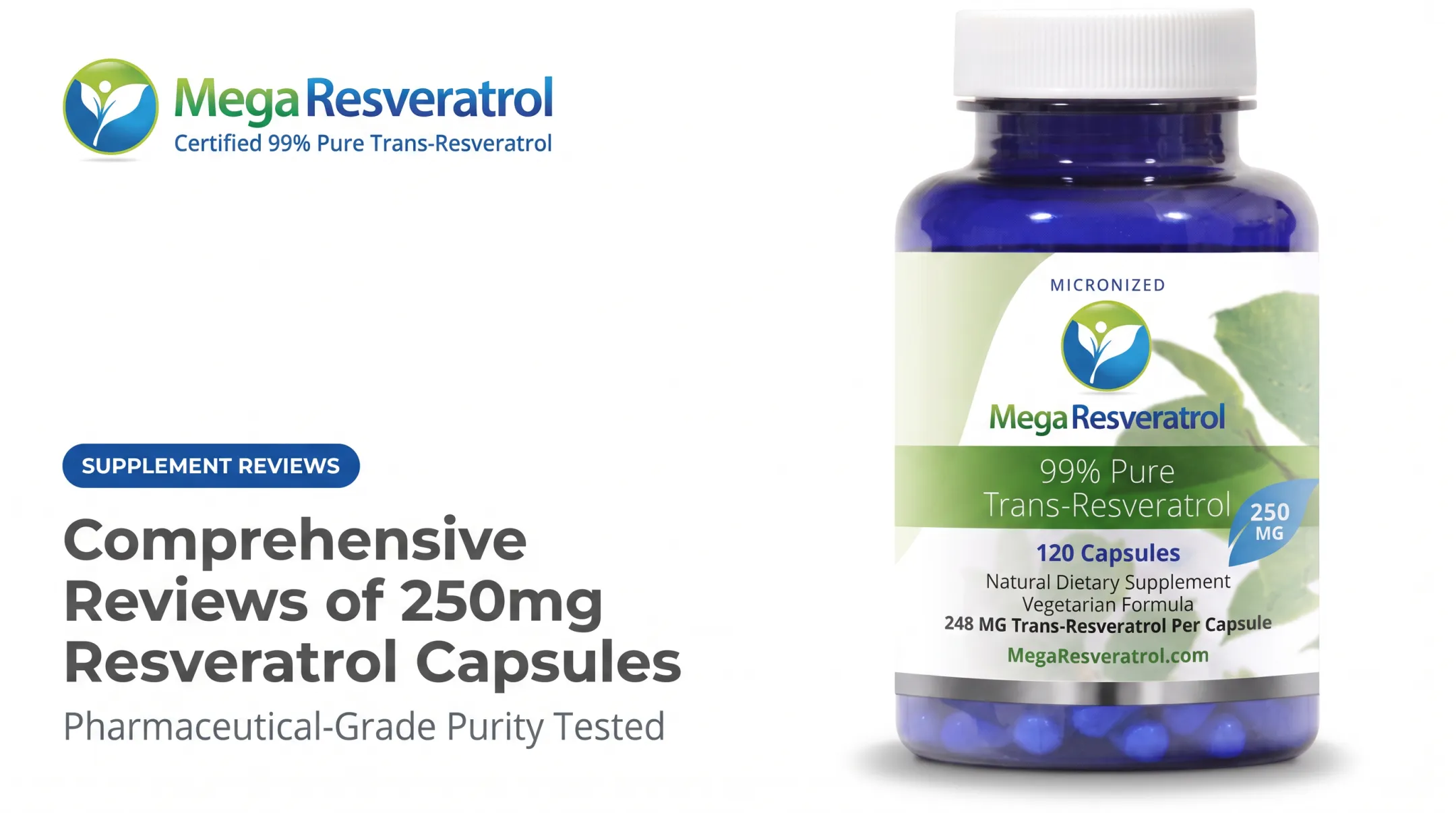
A product that meets both bars looks like this in practice: 99% pure trans-resveratrol, micronized to a D-50 under 1.90 micrometers, with every batch tested by independent US laboratories. Mega Resveratrol follows that standard and omits common excipients such as magnesium stearate and rice flour, which some lower-purity products use to add bulk or mask appearance.

Matching Dose to Research
Most menopause-specific trials used 75 mg twice daily (150 mg total). A 250 mg capsule sits comfortably in the 75–300 mg daily range those studies explored.
Practical steps:
- Start with a moderate, research-aligned dose
- Track symptoms — cognitive clarity, pain, sleep quality — for 4–6 weeks
- Share results with your healthcare provider before adjusting
- Prefer excipient-free capsules during this stage of life

Safety Considerations and Who Should Be Cautious
Resveratrol is generally well tolerated, but it's not risk-free for everyone.
Common mild side effects:
- Digestive upset (nausea, diarrhea), more common above 1 gram daily
Who should be cautious:
- Anyone on blood thinners or anti-platelet medications — resveratrol may inhibit platelet aggregation and raise bleeding risk
- Women with hormone-sensitive conditions, including certain breast cancers — check with an oncologist first, given its estrogen-receptor activity
- People taking multiple prescriptions — resveratrol may affect liver enzymes involved in drug metabolism
Animal research also found high doses enhanced warfarin's anticoagulant effect. Tell your clinician about resveratrol before surgery or if you use anticoagulants.
Safer use habits:
- Stick with studied doses unless your clinician advises otherwise
- Disclose all supplements at medical and pharmacy visits
- Pair use with fundamentals that support menopause health: exercise, stress management, and phytoestrogen-rich foods like flaxseed and edamame
Frequently Asked Questions
Does resveratrol help menopause?
Research shows resveratrol may support cognitive function, reduce pain perception, and support heart and metabolic health markers in postmenopausal women. Evidence for hot flashes and overall symptom relief remains mixed and still developing.
Can resveratrol increase estrogen levels?
Resveratrol binds weakly to estrogen receptors, acting as a mild mixed agonist/antagonist rather than raising estrogen levels directly. Its effects vary based on dose and individual hormone status.
What are the best supplements for menopause?
Resveratrol, black cohosh, and soy isoflavones are among the most researched options, each working through different mechanisms. The right choice depends on your specific symptoms and should be discussed with your doctor.
How much resveratrol should I take for menopause symptoms?
Clinical trials commonly used 75 mg twice daily (150 mg total). Starting with a moderate, research-aligned dose under medical guidance is the safest approach.
Is resveratrol safe to take long-term during menopause?
Resveratrol has been generally well tolerated at moderate doses in trials lasting up to 24 months. Long-term data beyond that is limited, so periodic check-ins with your doctor are recommended.