
Not every supplement on the shelf earns its price tag, though. Purity, dosing, and third-party testing separate what actually works from what's just marketing. This article breaks down the supplements with real evidence behind them, the ones to approach cautiously, and how to spot quality before you buy.
TL;DR
- Estrogen decline after menopause speeds up bone, muscle, and cardiovascular changes
- Calcium, vitamin D, B12, omega-3s, and creatine have the strongest evidence for women over 50
- Purity and third-party testing matter as much as the ingredient itself
- Popular options like vitamin E and beta-carotene carry real risks at high doses
- A personalized plan with your doctor, guided by bloodwork, beats a one-size-fits-all stack
Why Supplement Needs Change for Women Over 50
Declining estrogen after menopause speeds up bone resorption, muscle loss, and low-grade inflammation, all at once. Your body simply processes nutrients differently than it did at 35.
Aging also affects absorption. Atrophic gastritis affects 8-9% of adults over 65, reducing stomach acid needed to release B12 from food. Common medications compound this:
- Metformin can lower B12 absorption
- Acid reducers (PPIs, H2 blockers) impair B12 uptake from food
- Low stomach acid reduces calcium absorption efficiency
Those gaps show up in real behavior. CDC data shows supplement use among women jumps from 49% at ages 20-39 to over 80% by age 60, according to a CDC/NCHS data brief. The useful next step is choosing supplements that address absorption, bone, and cellular aging—not stacking products at random.
Top Supplements for Women Over 50 for Longevity
The supplements below were selected for scientific backing, relevance to menopause-related changes, and available purity standards. None of these replace a balanced diet, but each fills a specific, well-documented gap.
Mega Resveratrol (Trans-Resveratrol)
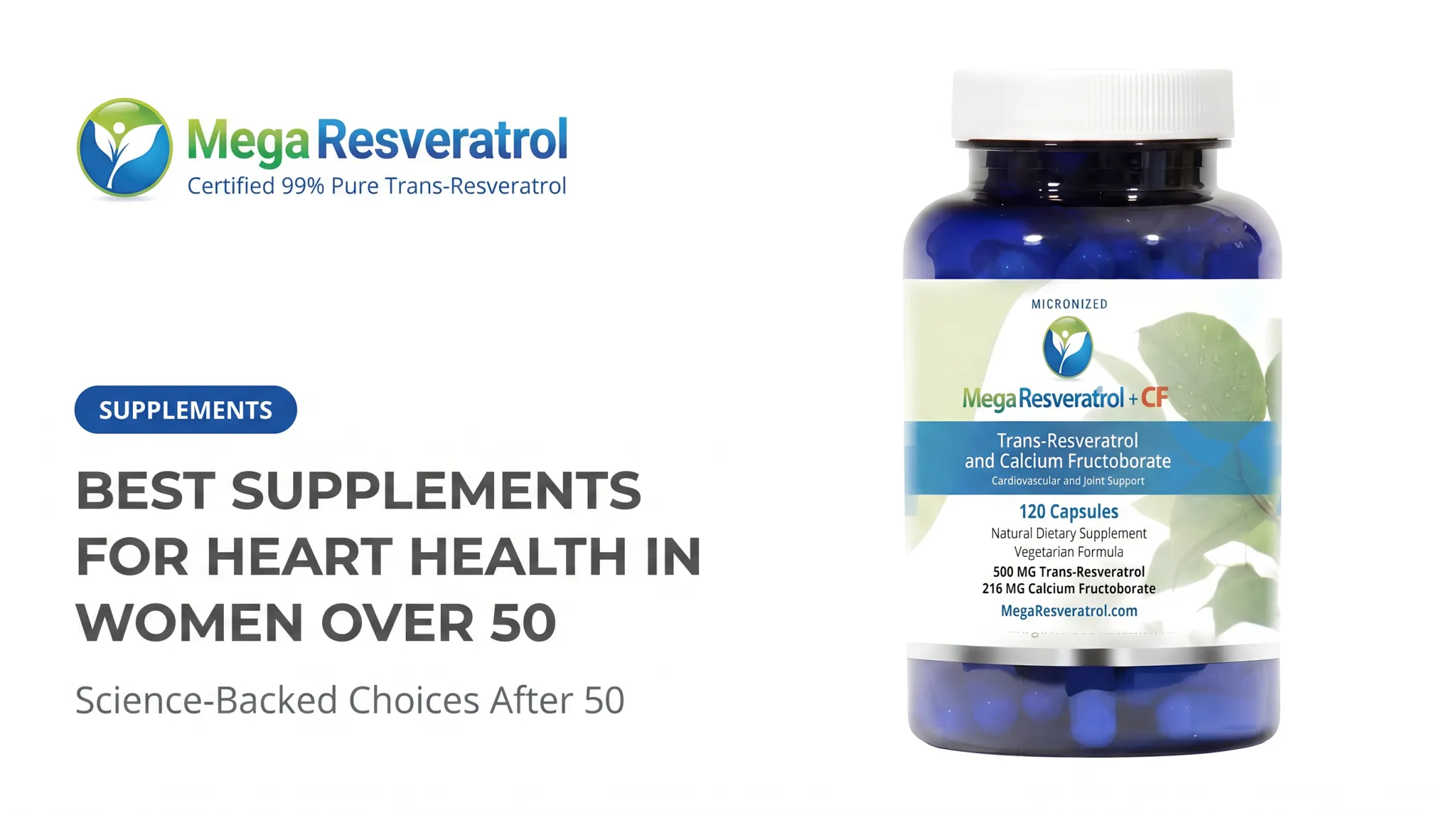
Mega Resveratrol has manufactured pharmaceutical-grade trans-resveratrol since 2007, in a GMP-certified, FDA-registered US facility. Over 100 research institutions worldwide, including NYU, Duke, and UCSF, have used the company's products in published studies.
What sets it apart:
- 99% purity, independently lab-tested batch by batch
- Micronized particles under 2 µm, for better absorption than standard powders (typically 170-220 µm)
- Zero fillers or excipients: only the active compound in a vegetarian capsule
Resveratrol is studied for cardiovascular support, mitochondrial function, and cellular aging pathways relevant to longevity. A 2024 systematic review in PMC found no conclusive clinical proof that it extends lifespan, though mechanistic and cardiovascular research remains active.
| Feature | Detail |
|---|---|
| Purity & Testing | 99% pure trans-resveratrol, independently certified per batch |
| Bioavailability | Micronized to under 2 µm for improved absorption |
| Value | Four-month supply at under $0.75/day; no fillers, gluten-free, non-GMO |

Calcium + Vitamin D Combination
This pairing is foundational for postmenopausal bone health. Estrogen decline reduces calcium absorption and speeds up bone resorption, making this combo one of the best-studied interventions for skeletal aging.
A meta-analysis of eight randomized trials involving nearly 31,000 adults over 50 found that combined calcium and vitamin D supplementation reduced total fractures by 15% and hip fractures by 30%, per the USPSTF evidence review.
| Feature | Detail |
|---|---|
| Recommended Dosage | ~1,200 mg calcium; 800-1,000 IU vitamin D daily |
| Form | Calcium citrate or carbonate paired with D3 |
| Key Consideration | Split doses (the body absorbs limited calcium per sitting) |

Omega-3 Fish Oil (EPA/DHA)
Estrogen has anti-inflammatory effects that fade after menopause, making omega-3s more relevant for heart, brain, and joint support. The American Heart Association recommends about 1 gram of combined EPA/DHA daily for people with existing heart disease.
Cognitive benefits are modest and not guaranteed. A 24-month trial testing 500 mg DHA plus 200 mg EPA found no significant cognitive difference in healthy older adults, per NIH's Omega-3 Fatty Acids fact sheet.
| Feature | Detail |
|---|---|
| Recommended Dosage | ~1 gram combined EPA/DHA daily |
| Quality Marker | IFOS certification or third-party purity testing |
| Caution | Doses above 1g/day linked to higher atrial fibrillation risk; consult a doctor if on blood thinners |
Creatine Monohydrate
Creatine has re-emerged as a longevity supplement, and women naturally store 70-80% less than men, according to a review in PMC. A 2024 meta-analysis of 16 trials found gains in memory, attention, and processing speed, without a clear lift in overall cognition.
A landmark two-year trial in 237 postmenopausal women found creatine didn't boost bone density directly, but it preserved bone geometry at the femoral neck and improved walking speed.
| Feature | Detail |
|---|---|
| Recommended Dosage | 3-5 grams daily, timing flexible |
| Form | Creatine monohydrate, water-based processing |
| Best Paired With | Resistance or strength training |

Vitamin B12
Between 3% and 43% of older adults have B12 deficiency, depending on diagnostic criteria, per NIH's B12 fact sheet. Risk climbs with metformin use, acid-reducing medications, and plant-based diets.
Unlike calcium or vitamin D, B12 has no established toxicity ceiling, which makes it one of the safer nutrients to supplement generously.
| Feature | Detail |
|---|---|
| Recommended Dosage | 2.4 mcg/day average; higher doses considered safe |
| Who's at Risk | Vegetarians, vegans, metformin or acid-reducer users |
| Deficiency Signs | Fatigue, tingling, memory issues, anemia |
Supplements to Approach with Caution After 50
Not every popular supplement has strong evidence behind it. Megadosing a few of them can actively cause harm:
- Vitamin E — Large doses may inhibit platelet function and increase bleeding risk, especially with blood thinners
- Beta-carotene — Two major trials found increased lung cancer risk in smokers taking 20-30 mg/day
- Excess folic acid — High doses offer limited added benefit and can mask B12 deficiency symptoms
- High-dose vitamin C — Offers little extra benefit above typical needs and can cause GI upset

Check with your doctor before starting anything new, especially if you take prescription medication.
How to Choose High-Quality Supplements
Common mistakes include chasing megadoses, skipping third-party testing, and trusting bold label claims over the actual Supplement Facts panel.
When comparing longevity supplements, check for:
- Independent lab certification verifying identity and purity
- GMP-certified manufacturing that meets FDA cGMP requirements for identity, strength, purity, and contamination limits
- Transparent ingredient lists free of unnecessary fillers, proprietary blends, or vague dosing
- Bioavailable forms, such as micronized powders the body can absorb efficiently
Purity and bioavailability decide whether a product delivers results after you take it.
Conclusion
The right supplements fill specific gaps identified through diet and bloodwork, not trends you saw online. Talk to your healthcare provider before starting anything new, and reassess your routine periodically as your needs shift with age.
When you compare longevity products, put purity and transparency first. Mega Resveratrol has supplied pharmaceutical-grade supplements to over 100 research institutions since 2007, which is a practical benchmark for that standard.
Frequently Asked Questions
What supplements are recommended for women over 50?
Calcium, vitamin D, B12, omega-3s, and creatine top most recommendations for bone, brain, and muscle health. Individual needs still depend on diet, bloodwork, and medications.
What is the number one supplement for longevity?
There's no single "best" supplement for longevity. Resveratrol, omega-3s, and creatine are frequently cited for cellular and healthy-aging support, though evidence strength varies by supplement.
What supplements should not be taken after 50?
Use caution with vitamin E (bleeding risk), high-dose beta-carotene (cancer risk in some groups), and unnecessary iron after menopause (overload potential).
Do women over 50 need a multivitamin?
Multivitamins can help fill dietary gaps, but they're not proven to extend lifespan. Quality and appropriate dosing matter more than simply taking one.
How much calcium and vitamin D should a woman over 50 take daily?
Roughly 1,200 mg of calcium and 800-1,000 IU of vitamin D daily supports postmenopausal bone health, though exact needs depend on diet and blood levels.
Are supplements safe to combine with prescription medications?
Not always. Vitamin D can interact with statins, and calcium can interfere with thyroid medication. Check with your doctor before combining supplements with prescriptions.