
But walk through any supplement aisle or scroll a few product pages, and the confusion sets in fast. One label says 250mg. Another says 500mg but is "50% standardized" — which, math aside, means the same 250mg of actual trans-resveratrol. Purity claims vary wildly, and third-party testing is often nowhere to be found.
This guide reviews the top 250mg resveratrol capsules on the market today, judged against purity, bioavailability, safety, and real cost-per-effective-milligram. No fluff, just what the label actually delivers.
Key Takeaways
- 250mg is an entry-to-moderate dose you can titrate upward if needed
- Purity at 98–99% trans-resveratrol matters far more than total capsule weight
- Independent, batch-by-batch lab testing separates trustworthy brands from guesswork
- Micronization meaningfully improves how much resveratrol your body absorbs
What Is 250mg Resveratrol and Why This Dose Matters
Resveratrol comes in two geometric forms: trans and cis. Trans-resveratrol is the clinically relevant one: it's more stable and binds more effectively to estrogen receptors, while cis-resveratrol breaks down through glucuronidation up to 10 times faster, according to a 2015 review published in PMC. That's why reputable labels specify "trans-resveratrol," not just "resveratrol."
A 2024 systematic review of human clinical trials found doses ranging from 5mg to 5,000mg per day, with 500mg the most common and a median of 490mg/day, according to research published in PMC. At 250mg, you get a moderate, titration-friendly starting dose — not a maximum.
The Label Math Trick to Watch For
Many "500mg" resveratrol products are only standardized to 50% trans-resveratrol, meaning you get 250mg of the active compound, not 500mg. Vitacost's label shows how this math works in practice: the title lists 250mg (the active amount), while the fine print shows 500mg total resveratrol at 50% standardization.

Always verify both figures on the label:
- Total extract weight
- Explicitly stated trans-resveratrol amount
They are rarely the same.
Why Purity Percentage Changes Everything
Purity decides whether a 250mg capsule delivers nearly the full dose—or roughly half of it.
- A 250mg dose at 99% purity delivers roughly 247.5mg of active trans-resveratrol
- A 250mg dose at 50% purity delivers only 125mg of active trans-resveratrol
Those two capsules are essentially different products wearing the same label.
A 2012 peer-reviewed study tested 14 retail resveratrol supplements using HPLC analysis. Only 5 of 14 products contained 95-105% of their claimed active ingredient; three contained as little as 8-64%, according to research published in PMC.
"Trust the label" is not a safe assumption in this category.
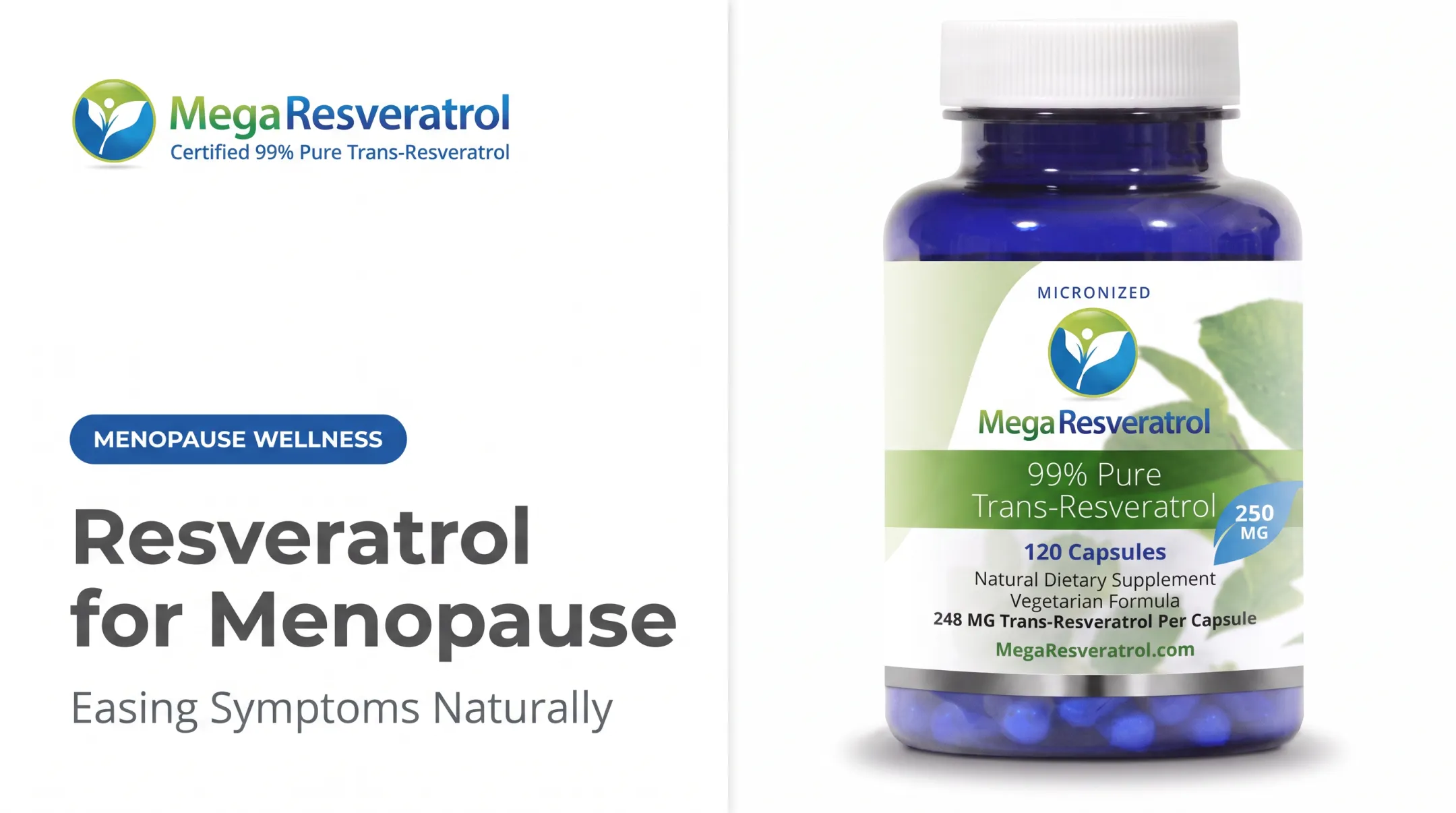
Mega Resveratrol's 250mg capsules are purified to a minimum of 99% trans-resveratrol, with no fillers, binders, or excipients. That is the benchmark for full label transparency at this dose.

How We Evaluated 250mg Resveratrol Capsules
We judged each product against five criteria:
- Purity/standardization — declared trans-resveratrol percentage, not just total extract weight
- Third-party lab testing — independent verification, ideally batch-by-batch
- Bioavailability/micronization — particle size and absorption claims
- Absence of fillers — clean-label formulation
- Cost per effective mg — price divided by actual trans-resveratrol delivered, not capsule count
GMP certification and FDA facility registration are baseline trust signals, but they're not proof of purity. Per the FDA's own consumer guidance, registration only means a facility filed paperwork and agreed to inspections. It does not mean the FDA approved the product's safety or effectiveness. A brand claiming "FDA-registered" is telling you less than it sounds like.
Suppliers used by research institutions are a stronger signal of manufacturing consistency. Mega Resveratrol, for instance, is cited as a supplier to more than 100 universities and research institutes worldwide, including NYU, Duke, and UPenn. Those labs require lot-to-lot reliability for reproducible experiments.
Comprehensive Reviews of Top 250mg Resveratrol Capsules
Mega Resveratrol 250mg
- Purity: 99% pure trans-resveratrol, verified batch-by-batch by independent US labs
- Micronization: Particle size under 2 microns (D-50 <1.90µm), versus 170-220µm for standard resveratrol — up to a 1,000% absorption improvement versus standard particle sizes
- Fillers: None. No binders, magnesium stearate, or flow agents
- Price: $50 for 120 vegetarian capsules — a four-month supply at roughly 42 cents/day
One ingredient, one purity spec, verified per batch — nothing else in the capsule.
Vitacost Trans-Resveratrol 250mg
- Purity: 500mg total resveratrol standardized to only 50% trans-resveratrol (net 250mg active)
- Testing: No product-specific independent assay disclosed on the listing
- Price: $13.99 for 60 capsules — about $0.23 per labeled 250mg serving, though the actual trans-resveratrol delivered is lower once you account for standardization
A workable budget pick, with the trade-off that lower purity and undisclosed assay data come with the lower price.
NOW Foods Resveratrol 200mg
- Purity: 200mg trans-resveratrol sourced from Polygonum cuspidatum, plus 10mg grape-seed extract
- Testing: Intertek GMP Supplement Certification; no trans-resveratrol purity percentage disclosed
- Price: $29.99 for 60 capsules
Not technically a 250mg product, but a common comparator in this category. Moderate dose, added grape-seed extract, and no disclosed purity percentage put it in entry-level territory.
Toniiq Resveratrol (98%)
- Purity: Claims 98% standardized trans-resveratrol, NSF and GMP certified
- Dose: 600mg per two-capsule serving — well above the 250mg benchmark
- Price: $25.97 for 60 capsules
Worth noting for its purity certifications, but the 600mg serving makes side-by-side comparison awkward. Halving the dose is not the same as buying a true 250mg product.
Side-by-side, the differences in purity, testing, and daily cost are easier to see in one place:
Comparison at a Glance
| Product | Trans-Resveratrol | Purity Claim | Third-Party Tested | Micronized | Price/Day |
|---|---|---|---|---|---|
| Mega Resveratrol 250mg | 250mg | 99% | Yes, every batch | Yes (<2µm) | ~$0.42 |
| Vitacost 250mg | 250mg (net) | 50% standardized | Not disclosed | No | ~$0.23 |
| NOW Foods 200mg | 200mg | Not disclosed | GMP cert only | No | ~$0.50 |
| Toniiq (per 600mg serving) | 600mg | 98% | Yes | Not disclosed | ~$0.43 |
Bottom line at 250mg: Mega Resveratrol costs a bit more per day than Vitacost (~$0.42 vs. ~$0.23), but delivers 99% pure trans-resveratrol with batch-level independent testing and micronization. Against a 50%-standardized option, that is roughly double the actual active compound plus verification you can check.

Benefits and Effectiveness of 250mg Resveratrol
Research on resveratrol in the 150-500mg range is genuinely mixed. That's worth knowing before you expect dramatic results.
- 150mg/day for 30 days in people with type 2 diabetes reduced intrahepatic lipid content and systolic blood pressure
- Near-identical 150mg dose in overweight participants showed no effect on cardiovascular markers or inflammation
- 250mg/day for 8 weeks in healthy older men did not raise SIRT1 or improve cardiovascular risk factors These findings come from a human intervention trial review in PMC, and the takeaway is nuanced: 250mg has been studied and may influence specific biomarkers, but it's not a guaranteed fix for cardiovascular health in healthy adults. That said, dosing accuracy is precisely why purity matters so much. Mega Resveratrol's founder, Doron Efrat, built the company after a 2003 heart attack and an LP(a) diagnosis pushed him to search for high-purity resveratrol. He found products that were 10-20% pure at best. That founding story makes a broader point: if a study population takes 250mg and your capsule only delivers half that due to poor standardization, you're not replicating the research dose at all. Individual results vary, and most studies ran 8 weeks or longer before showing measurable changes. This isn't a same-day supplement.

Safety, Side Effects, and How to Take 250mg Capsules
At 250mg, you're well below the roughly 1,000mg/day threshold where adverse effects become more common in clinical trials. Most people tolerate this dose well, though a few mild reactions can still show up.
Common mild side effects:
- Gastrointestinal discomfort
- Nausea
- Headache or fatigue
Who should avoid resveratrol without medical guidance:
- Anyone on blood thinners — resveratrol may increase warfarin's anticoagulant effect, per a 2020 adverse-effects review
- Pregnant or breastfeeding individuals, since safety data remains limited
- Anyone on medications metabolized by CYP3A4, CYP2C9, or CYP2D6 enzymes, which high-dose resveratrol can inhibit
If none of those apply, a few simple habits help you get consistent results from 250mg capsules.
Best practices for taking it:
- Pair with a meal containing dietary fat (avocado, olive oil, nuts) since resveratrol is fat-soluble
- Take at the same time daily for consistency
- Start at 250mg before considering higher doses
Talk to your doctor before starting, especially if you take prescription medication regularly.
Frequently Asked Questions
How long does it take for resveratrol capsules 250mg to kick in?
Antioxidant activity begins within hours of absorption, but visible or measurable benefits typically take several weeks of consistent daily use. Most clinical trials ran 8 weeks or longer before reporting results.
Do resveratrol capsules 250mg actually work?
250mg falls within the studied effective range for resveratrol, though clinical results vary by population and outcome measured. Purity and bioavailability largely determine how much benefit you actually get from that dose.
Should I take resveratrol capsules 250mg at night or during the day?
There's no strong clinical evidence favoring one time over another. What matters more is consistency and pairing the capsule with a meal containing dietary fat for better absorption.
What should I avoid when taking resveratrol capsules 250mg?
Avoid blood-thinning medications like warfarin without medical supervision, limit excessive alcohol, and don’t stack other high-dose antioxidant supplements unless a healthcare provider approves it.
What's the difference between 250mg and higher-dose resveratrol supplements?
Higher doses (500mg-1,000mg+) may produce stronger effects in some studies, but they also increase the risk of gastrointestinal side effects. 250mg offers a safer, well-tolerated entry point before increasing your dose if needed.