
While NMNH gets plenty of attention in scientific papers, the real question for most people is simpler: does it actually help with energy, metabolism, and cellular health? This article breaks down what NMNH is, how it works in the body, and what the current research says about its practical benefits.
TL;DR
- NMNH is a reduced, more stable form of NMN that may raise NAD+ levels faster
- Preclinical research shows superior NAD+ elevation compared to NMN in cells and mice
- Supports cellular energy, mitochondrial function, and DNA repair pathways
- Gained interest as an alternative after regulatory uncertainty around NMN
- Pairing NAD+ precursors with resveratrol is a common approach for cellular support
What Is NMNH?
NMNH (reduced nicotinamide mononucleotide) is a hydrogenated derivative of NMN. Structurally, it replaces NMN's nicotinamide component with a dihydronicotinamide component.
Researchers first identified it as a distinct NAD+ precursor in a 2021 study published in The FASEB Journal.
It's typically taken as a daily capsule supplement to support:
- Cellular energy production
- Metabolic function
- Healthy aging
NMNH isn't a treatment or cure for any condition. It's a precursor molecule meant to help restore NAD+ levels that naturally decline with age.
Interest in NMNH grew partly because of regulatory uncertainty around NMN. The FDA's 2022 letter treated NMN as excluded from the dietary supplement definition, so makers and consumers turned to NMNH as a chemically distinct alternative. The FDA later reconsidered its NMN position in September 2025, but by then NMNH had already established itself as a research-backed option.
Key Advantages of NMNH for Health and Energy
The benefits below focus on measurable cellular and metabolic outcomes drawn from published research, not marketing claims. Each ties back to a specific biological function: how the body makes energy, repairs itself, and manages age-related wear.
Advantage 1: Superior NAD+ Elevation
NMNH's molecular structure allows it to enter the NAD+ synthesis pathway more directly than NMN does. That shortcut means faster, more efficient NAD+ replenishment inside cells. The 2021 FASEB study found some striking numbers:
- NMNH raised NAD+ significantly in mouse liver cells at just 5 µM, a concentration 10 times lower than what NMN needed to produce any effect
- At 500 µM, NMNH produced nearly a 10-fold NAD+ increase, while NMN only managed about a 2-fold increase even at double the concentration
- NMNH raised NAD+ within 15 minutes and stayed elevated for 24 hours, while NMN plateaued after about an hour
- In mice, NMNH sustained roughly double baseline blood NAD+ for at least 20 hours, while NMN-related increases faded after 4 hours Why this matters: Faster, longer-lasting NAD+ availability gives cells more consistent fuel for energy metabolism through the day. That is most relevant if you are noticing age-related energy decline or metabolic slowdown. These results come from cell and mouse studies. They are not confirmed human outcomes yet.

Advantage 2: Mitochondrial and Metabolic Support
NAD+ is a required input for mitochondrial function, the process that turns food into usable cellular energy. When NAD+ runs low, mitochondrial efficiency suffers, and so does the body's ability to manage blood sugar and burn fat effectively. Human data on NAD+ precursors (mostly NMN so far) shows a mixed picture:
- A 2021 Science trial in postmenopausal women with prediabetes found that 250 mg/day of NMN for 10 weeks improved muscle insulin sensitivity by roughly 25% compared to placebo
- The same trial found no improvement in mitochondrial oxidative capacity, fasting glucose, or body composition over that period
- A separate NR trial (1,000 mg twice daily for 12 weeks) found no improvements in insulin sensitivity, energy expenditure, or lipid metabolism In practice: NAD+ precursors show a real signal for insulin sensitivity in some groups, but they do not move every metabolic marker. Active adults and aging adults managing metabolic health may treat them as a research-backed add-on—not a standalone fix.
Advantage 3: Cellular Repair, DNA Protection, and Healthy Aging
Adequate NAD+ levels fuel enzymes tied to DNA repair and sirtuin activation—the systems cells use to handle stress and accumulated damage over time. In a kidney cell model exposed to hypoxia and reoxygenation, NMNH specifically:
- Reduced markers of cell injury (KIM-1 expression)
- Increased mitochondrial biogenesis signaling (Tfam transcription)
- Enhanced cell-cycle progression tied to tissue repair
- Increased expression of antioxidant genes PRDX1 and GPX1 One caveat: during reoxygenation, NMNH triggered a short-term superoxide spike even while boosting antioxidant gene expression. That is a mixed result, not a blanket "reduces oxidative stress" claim. Broader NAD+ research still shows NAD+ is a required substrate for PARP enzymes in DNA repair, though those studies used NMN and NR rather than NMNH. For long-term cellular health goals, some people pair an NAD+ precursor with an antioxidant such as resveratrol for complementary cardiovascular and cellular support.

NMNH vs. NMN: Why the Shift Matters
The FDA's 2022 determination treated NMN as excluded from the dietary supplement category under a drug exclusion clause, following an earlier drug trial application. That decision (later reversed in September 2025) shifted researcher and consumer attention toward NMNH as a chemically distinct alternative that wasn't caught up in the same regulatory question.
NMNH's structure lets it enter the NAD+ synthesis pathway more directly than NMN, which is the mechanistic reason behind its faster preclinical results. Here is how the evidence base compares today:
| Compound | Evidence base | Status |
|---|---|---|
| NMNH | 2021 cell and mouse study | Preclinical; no published human trials identified |
| NMN | Multiple human RCTs, including a 60-day dose-ranging trial | Established human safety data |
| Resveratrol | 194 clinical studies over ~20 years | Decades of clinical research |
NMNH looks promising in early models, but it remains preclinical—well behind NMN's human RCT record and resveratrol's decades of clinical study.
What Happens When NAD+ Decline Is Left Unaddressed
NAD+ levels drop measurably with age. Human tissue studies estimate:
- Skin NAD+ can decline by 50% or more across adulthood
- Liver NAD+ in adults over 60 runs about 30% lower than in adults under 45
- Brain NAD+ may decline 10-25% based on MRI estimates, though findings vary by study

Left unaddressed, chronically low NAD+ is associated with:
- Reduced cellular energy metabolism and mitochondrial efficiency
- Slower cellular repair and higher oxidative stress
- Declining insulin sensitivity over time
- Accelerated markers of cellular aging
To be clear, these are biochemical associations from human tissue studies, not a confirmed symptom checklist. But the trend line on NAD+ decline is consistent enough across studies to take seriously.
How to Get the Most Value from NMNH Supplementation
NMNH works best as part of a consistent, well-sourced routine rather than a sporadic add-on. A few practical guidelines:
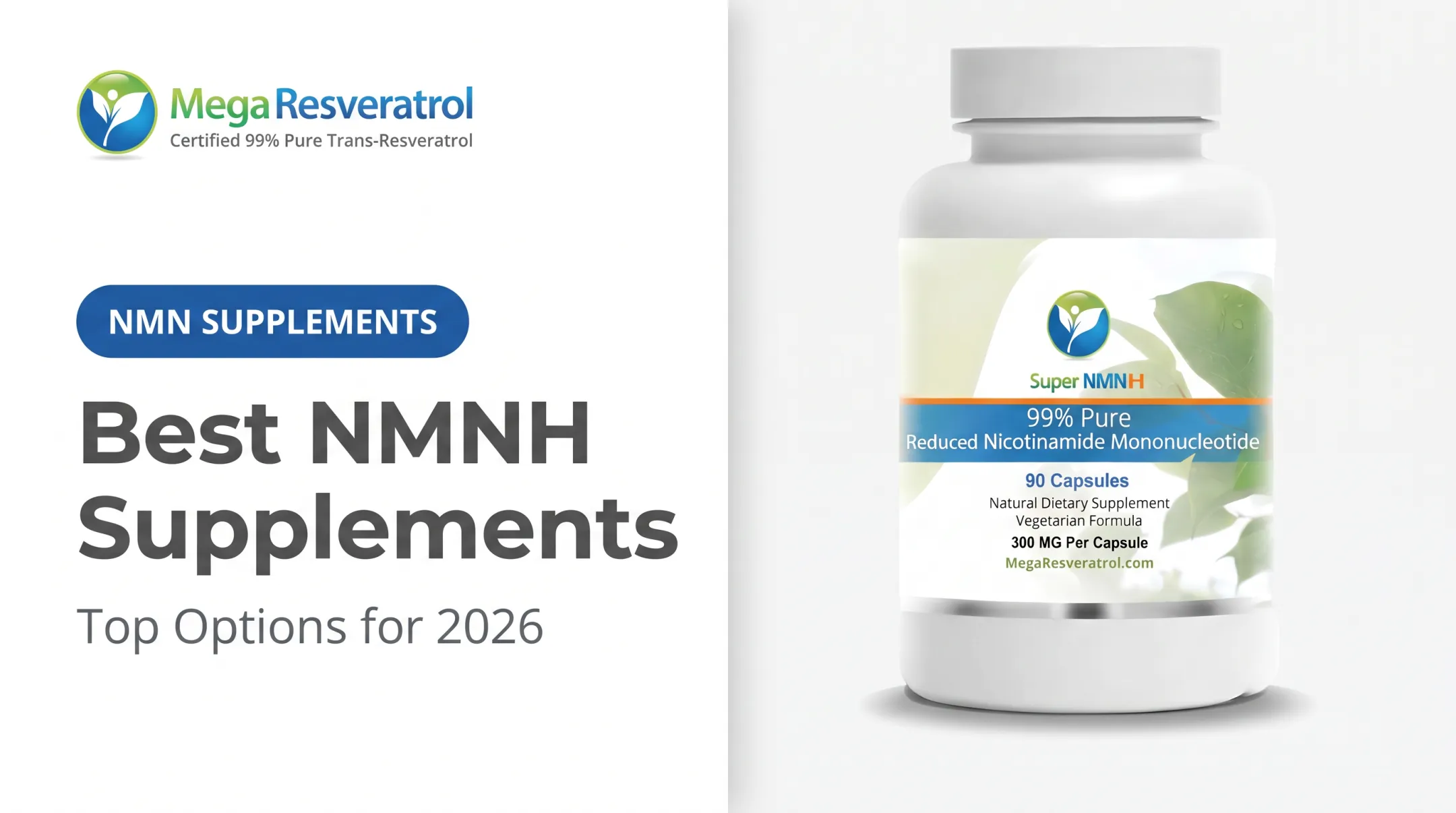
- Choose lab-tested, high-purity formulations. Look for third-party Certificates of Analysis, not just a label claim. Mega Resveratrol's Super NMNH, for example, is independently certified at 99% purity by a U.S. laboratory and comes in 300 mg vegetarian capsules with no fillers or excipients.
- Take it consistently. A typical serving is one to two 300 mg capsules daily. Sporadic use won't give NAD+ levels the sustained support the research points to.
- Consider pairing with resveratrol. NAD+ precursors and antioxidant compounds like trans-resveratrol are commonly stacked for complementary cellular and cardiovascular support, though NMNH-specific data is still limited.
- Talk to a healthcare provider first. This is especially important if you have liver or kidney conditions or take other medications, since NMNH's human safety data is still emerging.
- Keep it refrigerated. NMNH needs cold storage to preserve stability, unlike some supplements that tolerate room temperature.

Conclusion
NMNH's real appeal comes down to three things:
- Faster NAD+ elevation in preclinical models
- Support for mitochondrial and metabolic function
- A role in DNA repair pathways tied to healthy aging
None of this is a guaranteed fix, and human clinical data on NMNH specifically is still catching up to the promising cell and mouse findings.
These benefits tend to compound with consistent, high-quality use rather than showing up overnight. Treat NMNH as one piece of an ongoing wellness strategy, ideally from lab-verified, high-purity supplements.
Frequently Asked Questions
What is the difference between NAD+ and NMNH?
NAD+ is the active coenzyme your cells use directly for energy production and repair. NMNH is a precursor molecule your body converts into NAD+, and early research suggests it does so more efficiently than other precursors like NMN or NR.
Is NMNH better than NMN?
Early cell and mouse research suggests NMNH raises NAD+ faster and to a greater degree than NMN. However, NMN has years of human clinical trials behind it, while NMNH's human research is still emerging.
Why was NMN banned by the FDA?
The FDA's 2022 letter determined NMN was excluded from the dietary supplement definition under a drug exclusion clause tied to an earlier drug trial application. The FDA reversed this position in September 2025, determining NMN is not excluded after all.
Are there side effects associated with NMNH supplements?
Human safety data specific to NMNH is limited, since most existing research is preclinical. Anyone with liver or kidney conditions, or who is pregnant or breastfeeding, should consult a healthcare provider before use.
How long does it take to notice benefits from NMNH?
Individual results vary, and there's no controlled human trial data yet on NMNH's timeline specifically. Consistency matters more than speed, since NAD+ support tends to build over weeks of regular use.
Can NMNH be combined with other supplements like resveratrol?
Yes. NAD+ precursors and antioxidant compounds like resveratrol are commonly stacked for complementary cellular and cardiovascular support. Speak with a healthcare provider before combining supplements, especially at higher doses.